









The Starting Line
Influencer Marketing Statistics: Influencer marketing is a strategy where different brands work with people who have a lot of followers on social media to promote their products or services. These people, called influencers, use platforms like Instagram, TikTok, YouTube, and Facebook to create content that their followers like.
The effective benefit of influencer marketing is that it helps brands reach a specific audience in a real and engaging way, which builds more trust between the brand and its customers. Social media has made influencer marketing one of the best ways for brands to connect with consumers, making it a strong tool in today’s digital marketing world.
Top of the Line
- Influencer Marketing Statistics show that the global influencer marketing industry was estimated to reach approximately USD 33 billion in 2025.
- 93% of marketers include influencer marketing in their brand plans to help promote their products and reach people.
- Similarly, nearly 75% of people say they now create and share more content than before.
- Around 63% of brands plan to use AI to help run their influencer campaigns, and 55% of these brands will use AI to find the right influencers.
- On the other hand, 25% of people plan to spend over 40% of their marketing budget on influencer campaigns.
- In 2025, 80% of brands either maintained or increased their influencer-marketing budgets, while 47% increased budgets by 11% or more.
- Influencer marketing is an effective form of marketing, as claimed by 85% of survey respondents.
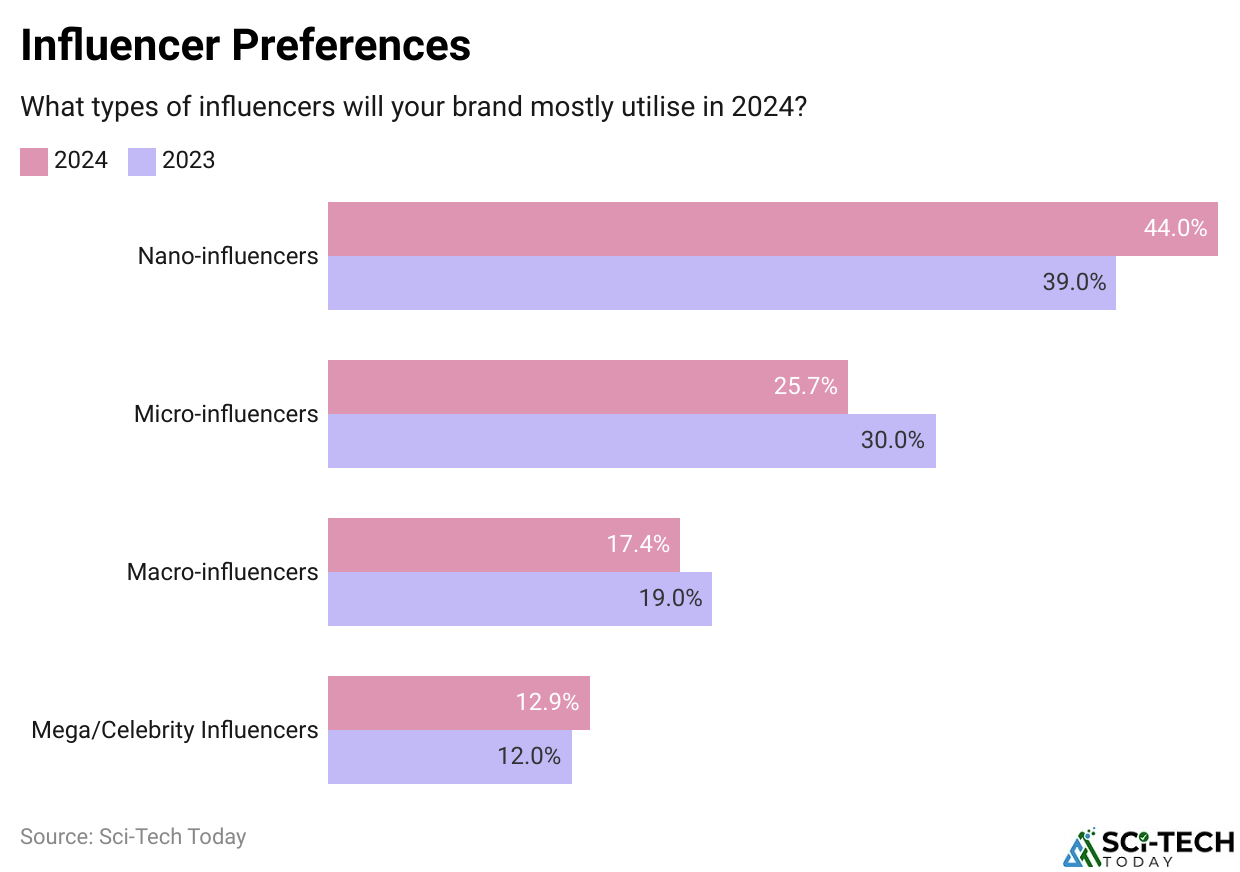
- Influencer Marketing Statistics further state that brands prefer working with small influencers (nano 44%, micro 26%) over expensive macro-influencers (17%) and celebrities (13%).
- TikTok is the top influencer platform, used by 69% of brands, ahead of Instagram (47%), YouTube (33%), and Facebook (28%).
- The main goal of influencer campaigns is to create User-Generated Content (56%), while increasing sales (23%) is the second.
- In 2025, nearly 47.4% of brands planned to spend less than USD 10,000 annually on influencer marketing.
- The biggest concern in this market is influencer fraud, resulting in around 15% of influencer accounts being fake or involved in cheating.
General Influencer Marketing Statistics
- In 2024, close to 57.5% of the marketers resorted to the use of third-party platforms for the purpose of influence marketing, which is a decline from 60.3% recorded in 2023.
- The majority (54.3%) claims to evaluate the performance of the influencer marketing campaigns in terms of the number of views, reach, and impressions.
- Additionally, engagement (23.5%) and conversions/sales (22.1%) are other measures of the marketing influencer success rate.
- Also, in 2024, 41.4% view the process of finding suitable influencers as difficult, “medium” being the biggest category.
- However, 37.7% of influencer marketing brands regard it as an easy task, while 21% view it as difficult.
- Half of the brands collaborating with influencers have online stores through which they sell their products.
(Source: 99firms.s3.us-west-1.amazonaws.com)
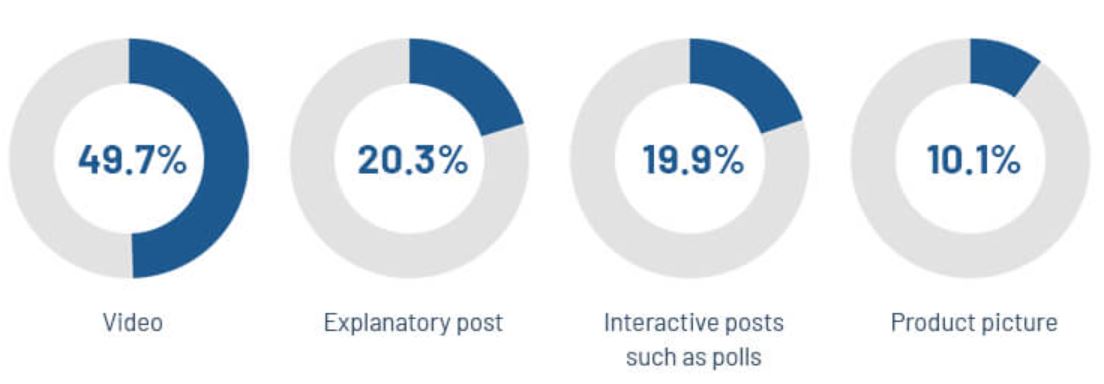
- Although videos attract more engagement, almost half of the marketers (49.7%) prefer using a detailed post rather than posting a picture of the product. This is followed by the explanatory post (20.3%), interactive posts such as polls (19.9%), and images of the product (10.1%).
- Influencer Marketing Statistics stated that more than 60% of marketers expect influencers to produce content where they are seen using the product.
- For every 10 micro-influencers, there is 1 mega-influencer.
- Micro-influencer campaigns are 60% more engaging than normal campaigns.
Influencer Marketing Market Size Statistics
(Reference: statista.com)
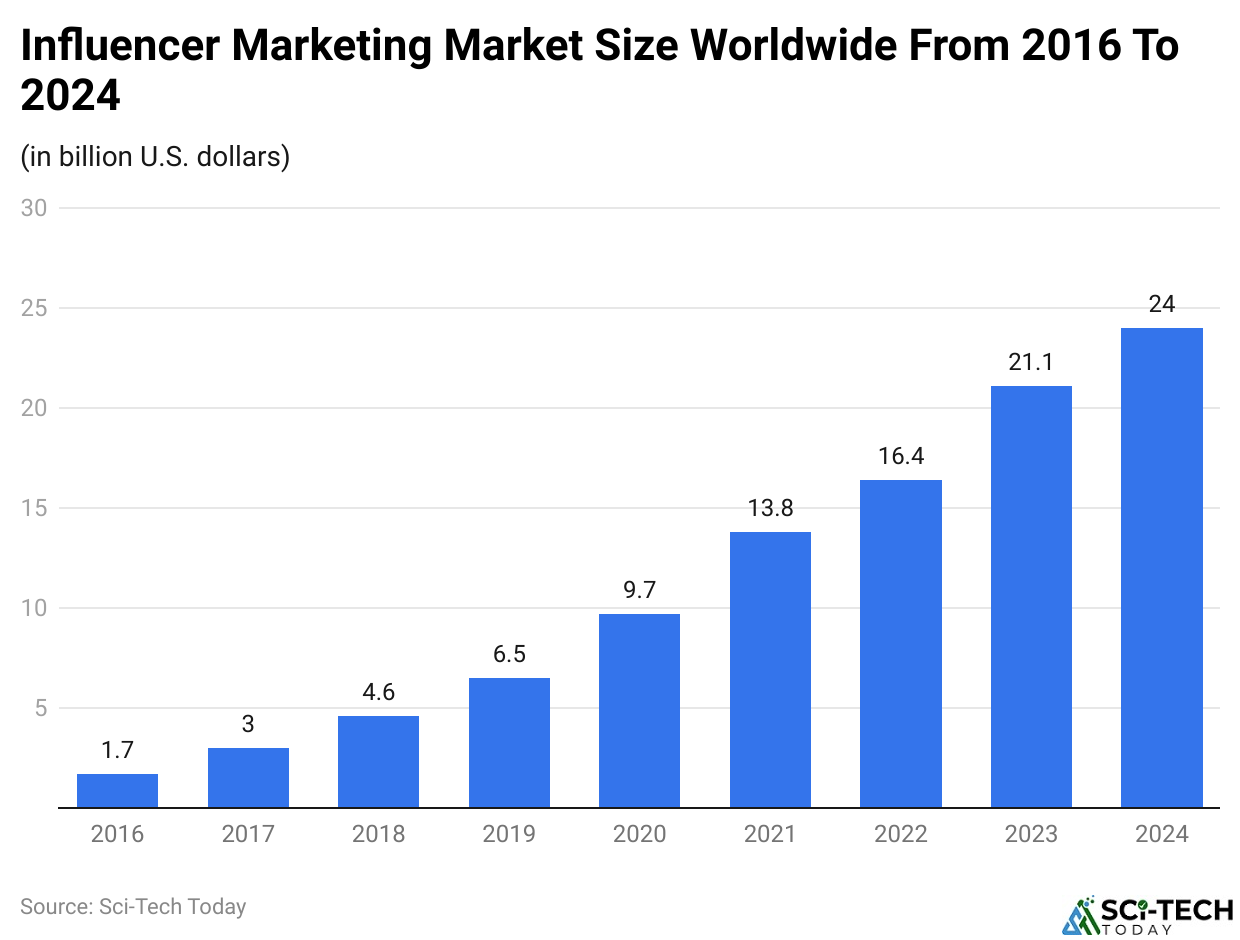
- According to Influencer Marketing Hub/Statista-based estimates, the global influencer marketing sector was projected to reach approximately USD 32.55 billion in 2025, compared with USD 24 billion in 2024.
- Conversely, influencer marketing grew from approximately USD 1.7 billion in 2015 to USD 32.55 billion in 2025.
The Most Used Social Media Channels by Influencer Marketing Brands
- In 2025, 64.6% of marketers actively used influencer marketing.
- Instagram remained the leading influencer-marketing platform in 2025, with 57% of brands selecting it as their preferred channel for influencer campaigns. TikTok was a close second, used by 52% of brands.
- Furthermore, other commonly used channels are represented as Facebook (27.5%), YouTube (33.1%), X/Twitter (9.9%), LinkedIn (9.6%), Twitch (7.9%), and others (14.7%).
TikTok Marketing Statistics
- TikTok was used by approximately 52% of brands for influencer marketing, although intended investment declined amid regulatory uncertainty in the United States.
- TikTok had approximately 1.59 billion monthly active users globally in early 2025, replacing the earlier figure of more than 1.1 billion.
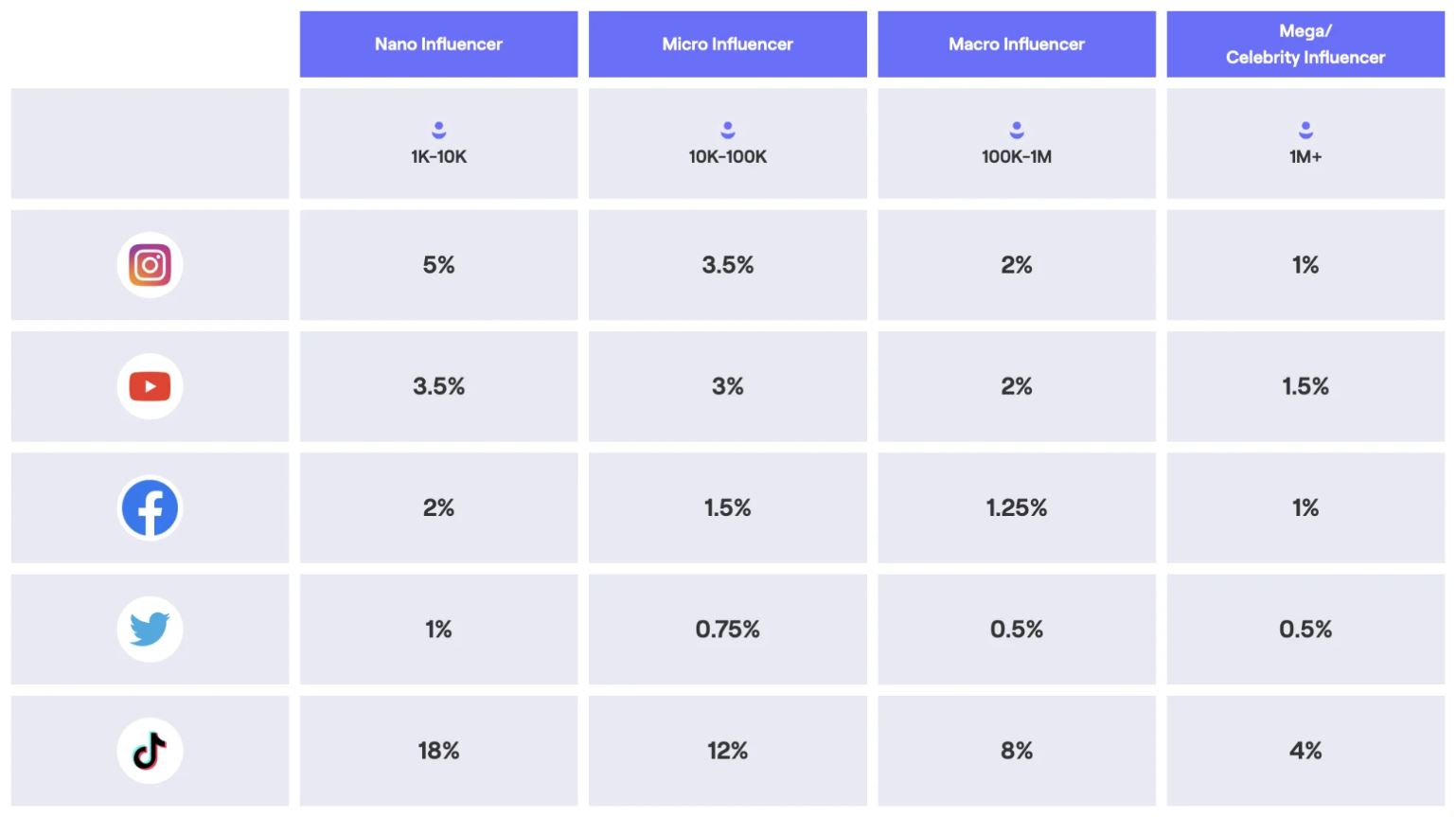
- Influencers on TikTok have an average engagement rate of 6%, which is higher than Instagram (3%) and YouTube (1.5%).
- Total U.S. influencer-marketing spending was forecast to reach USD 10.52 billion in 2025 across platforms, while TikTok-related influencer spending in the United States was forecast to grow by 17.0%.
- As per Influencer Marketing Statistics, almost 62% of TikTok users learn about new products via influencer content.
- A TikTok influencer campaign has a conversion rate that is five times higher than that of conventional digital ads.
- In the same year, approximately 70% of marketers involved with influencer marketing will boost their TikTok marketing budget.
- Around 40% of TikTok’s audience is between 18 and 24 years old, making it a great platform for reaching young people, especially Gen Z.
- In the same duration, TikTok influencers with 100,000 to 500,000 followers can charge USD 500 to 5,000 for each sponsored post.
- 58% of TikTok users trust product recommendations from influencers they follow.
Instagram Marketing Statistics
- Instagram continues to dominate the influencer marketing industry in 2025, making up 67% of all influencer marketing spending.
- Instagram reached 3 billion monthly active users in September 2025, giving brands a massive audience for influencer campaigns.
- Influencers on Instagram have an average engagement rate of 3%, which is strong compared to other platforms like YouTube (1.5%) but lower than TikTok (6%).
- Statista estimated the global Instagram influencer marketing at more than USD 22 billion in 2025.
- Stories and Reels are the most widely used forms of content, with the latter format demonstrating a 22% engagement rate in comparison with regular posts.
- Influencers on Instagram having 500,000 to 1 million subscribers can earn USD 5,000 to USD 10,000 for each sponsored post.
- 60% of Instagram users prefer video content over static images, making video a key part of influencer strategies.
- 70% of Instagram influencer marketing campaigns focus on lifestyle, beauty, and fashion brands.
Facebook Marketing Statistics
- Facebook was accounted for 25% of global influencer marketing spending in 2025, making it a key platform for marketers.
- Facebook had more than 3.07 billion monthly active users in 2025, Facebook remains one of the largest social platforms for influencer marketing campaigns.
- Facebook influencers have an average engagement rate of 2.5%, which is lower than TikTok but higher than many other social networks.
- To date, brands have invested around USD 8 billion in Facebook influencer marketing campaigns.
- Influencer Marketing Statistics reports that 54% of Facebook users say they learn about new products and services through influencer content.
- In 2025, 64.6% of surveyed marketers actively used influencer marketing overall.
- The Facebook video, particularly live videos, is three times more engaging than static posts.
- Facebook influencers who have 100,000 to 500,000 followers normally cost between USD 1,000 to USD 6,000 per post.
- Forty percent of Facebook’s audience is aged between 25 to 34 years, making it an ideal platform to reach millennials.
- The conversion rate from influencer marketing on Facebook is four times that of normal display ads.
YouTube Marketing Statistics
- The Influencer Marketing Statistics state that 80% of YouTubers claim that the engagement rate plays a more crucial role than the view count while cooperating with brands.
- Nearly 90% of people declare that they discovered new products and brands via YouTube.
- There are 385,000 YouTube influencers in the United States.
- The majority of YouTubers have subscribers ranging between 10,000 and 50,000.
- YouTube influencers account for 33% of brands that use influencer marketing.
- The number of YouTube views related to the beauty industry amounts to more than 169 billion.
- The content which the YouTube influencers create most frequently is review videos.
- YouTube influencers with more than 1 million subscribers may earn up to USD 60,000 from ads yearly.
- 60% of YouTube subscribers claim that they prefer purchasing recommendations of their favorite YouTubers rather than celebrities’.
Highest Influencer Marketing by Engagement Rate
(Source: cdn.shopify.com)
Consumers Purchased Item After Seeing It on Social Media, By Country
(Reference: statista.com)
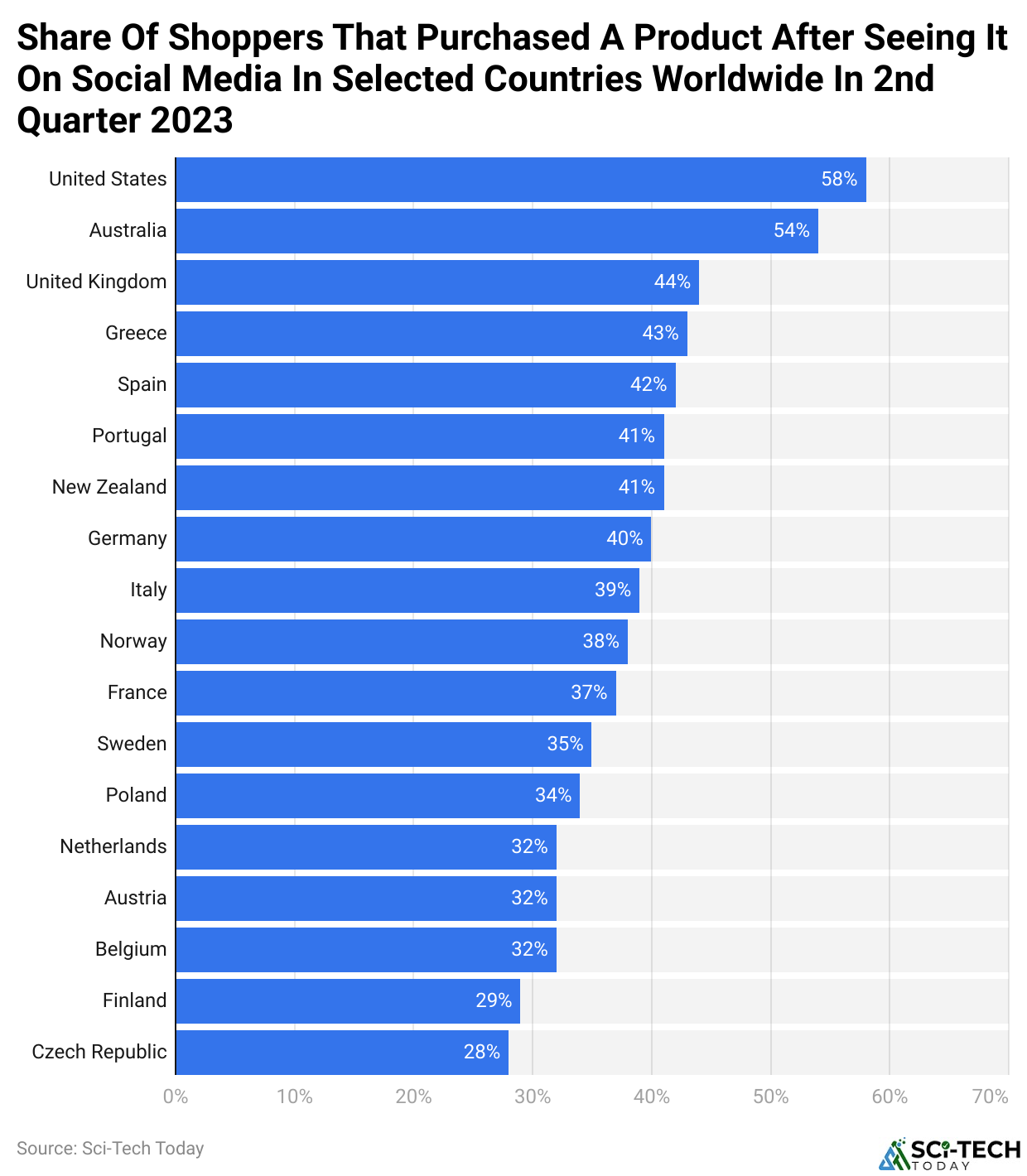
- As of 2025, approximately 58% of U.S. shoppers report having purchased something they saw on social media.
- In Australia, 54% of people purchase after seeing a product on social media, and in the United Kingdom, up to 44%.
- Share of shoppers that purchased a product after seeing it on social media in other countries are stated as Greece (43%), Spain (42%), Portugal (41%), New Zealand (41%), Germany (40%), Italy (39%), Norway (38%), France (37%), Sweden (35%), Poland (34%), Netherlands (32%), Austria (32%), Finland (29%), Czech Republic (28%).
Influencer Marketing Budget Allocation Statistics
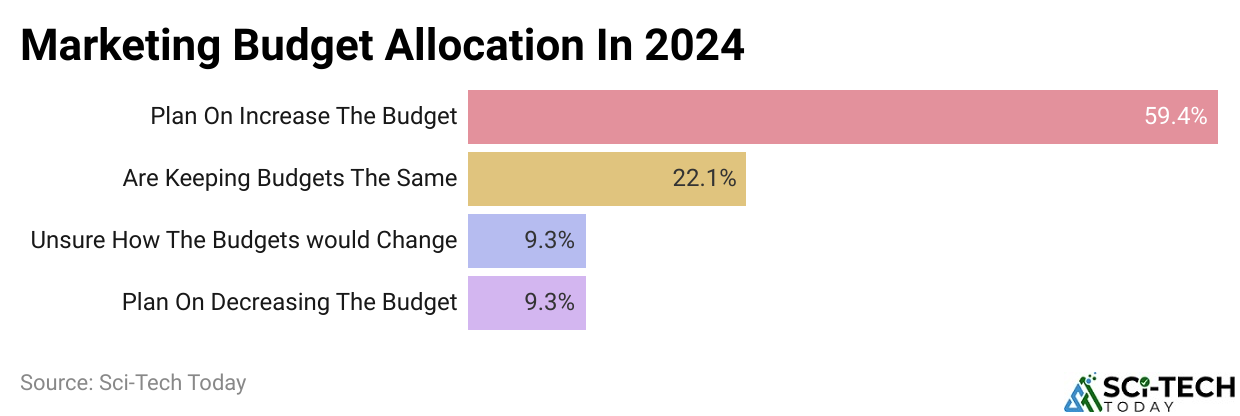
(Reference: influencermarketinghub.com)
- In 2025, 80% of brands either maintained or increased their influencer-marketing budgets.
- 47% of brands increased their influencer-marketing budgets by 11% or more in 2025.
- An additional 9.3% said they were curious if their influencer marketing budgets would change.
- Similarly, only 9.3% plan to reduce their influencer marketing budgets.
Share Of Marketing Budgets Spent on Influencer Marketing
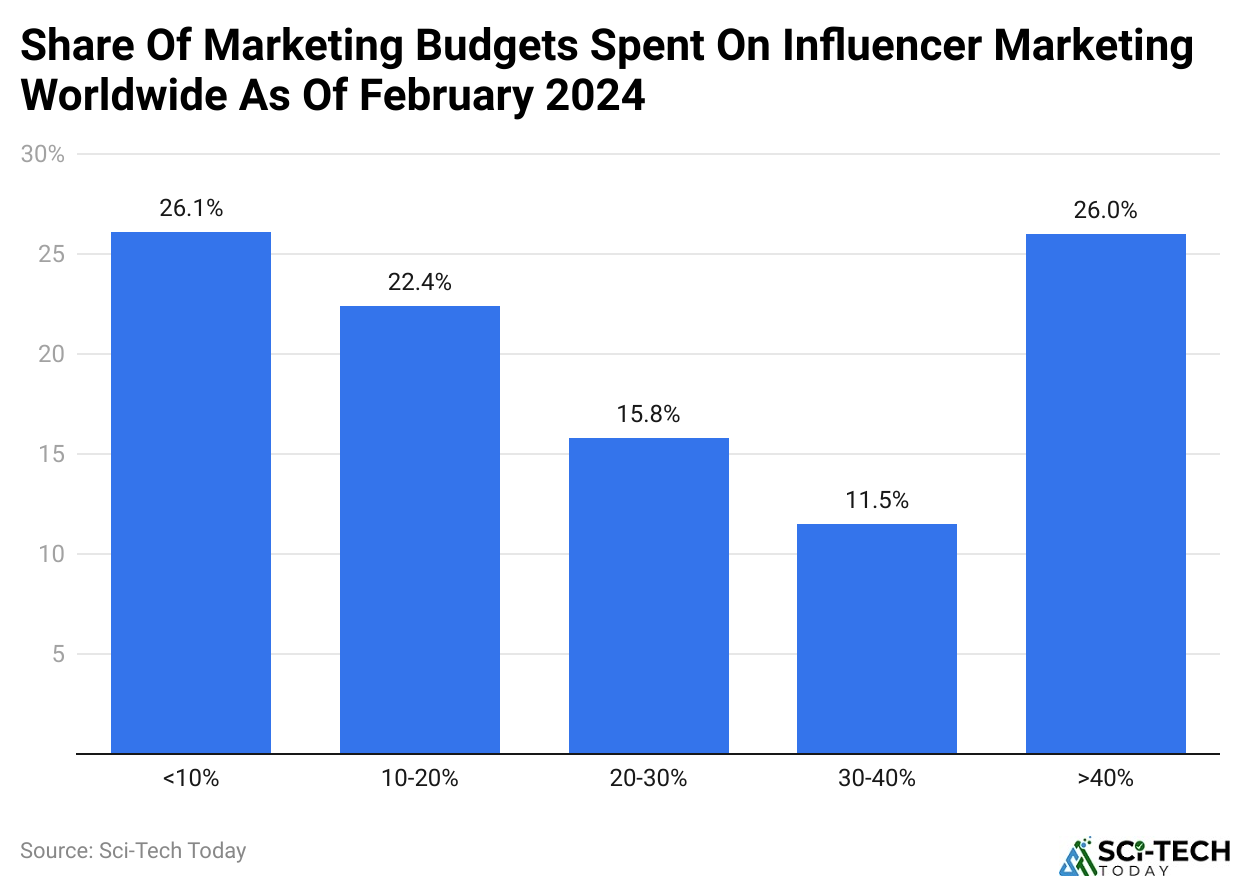
(Reference: statista.com)
- A January 2025 Statista survey found that 14.4% of marketers and industry leaders worldwide allocated 10%–15% of their total marketing budget to influencer marketing.
- In the same 2025 survey, nearly 12% of respondents allocated more than 50% of their marketing budget to influencer marketing.
- Furthermore, in the same period, the share of marketing budgets spent on influencer marketing worldwide was less than 10% (26.1%), 20 to 30% (15.8%), and 30 to 405 (11.5%).
Influencer Marketing Advertising Statistics
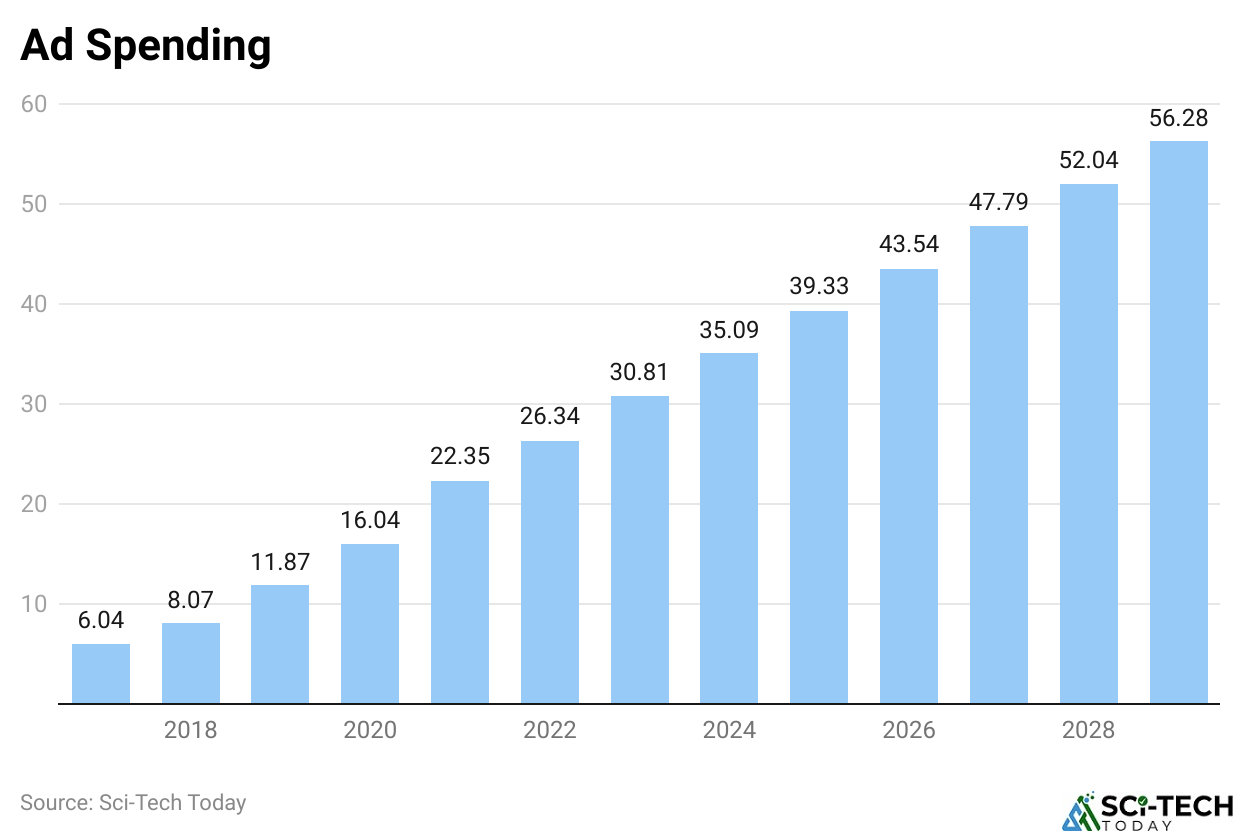
(Reference: statista.com)
- According to Statista, global influencer advertising spending was forecast to reach approximately USD 39.21 billion in 2025.
- The market was forecast to grow at an annual rate of approximately 9.3% from 2025 to 2029, reaching roughly USD 56.3 billion by 2029.
- Average influencer-advertising spending was projected at approximately USD 6.69 per internet user in 2025.
- China remained the world’s largest influencer-advertising market in 2025.
Influencer Marketing Expenditure in the U.S
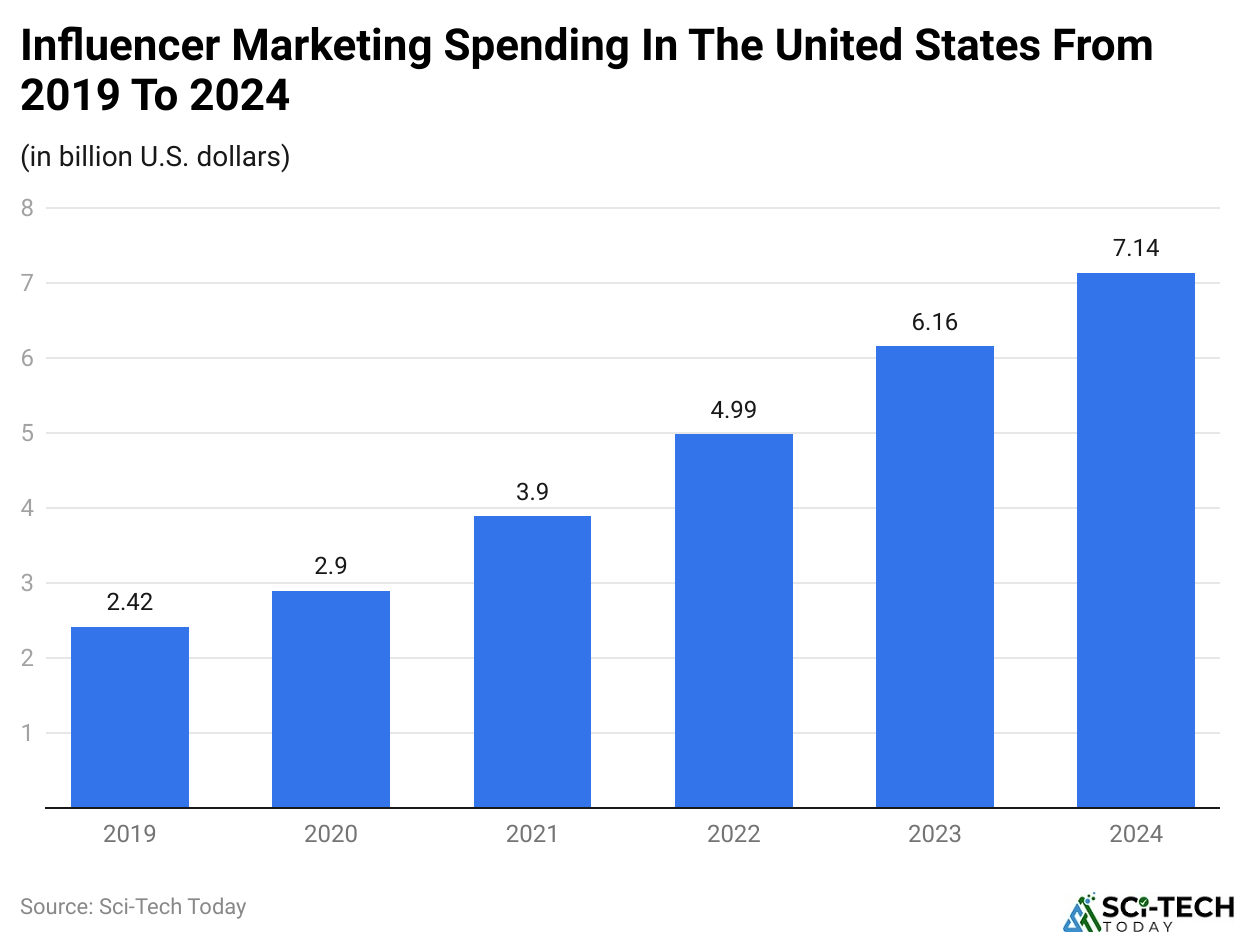
(Reference: statista.com)
- By the end of 2024, American influencer marketing spending will account for USD 9.15 billion.
- In 2025, U.S. influencer-marketing spending was forecast to reach USD 10.52 billion, a 15.0% year-over-year increase.
Influencer Marketing Brands Spending Statistics
 (Reference: influencermarketinghub.com)
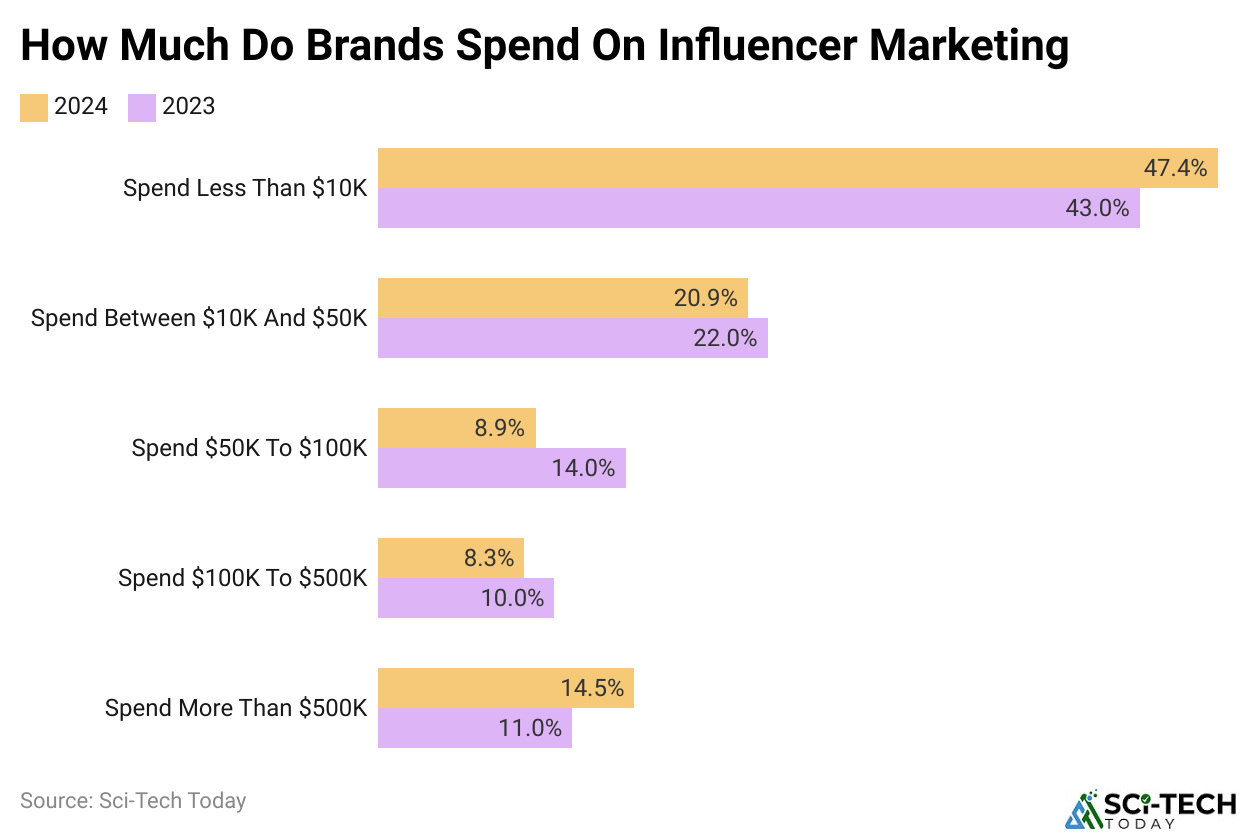
- As per the Influencer Marketing Statistics 2024, around 47.4% of brands pay under USD 10,000 every year in influencer marketing, compared to 43% in the previous year.
- Approximately 20.9% of organizations paid for influencer marketing somewhere between USD 10,000 and USD 50,000, compared to 22% last year.
- Influencer Marketing Statistics 2024 states that another 8.9% of organizations pay somewhere between USD 50,000 and USD 100,000 for influencer marketing, and it is less than what they paid last year since 14% paid this much last year.
- 8.3% of companies pay around 100K to 500K this year, compared to 10% last year.
- A larger 14.5% spent over USD 500K, up from 11% last year, nearly four times more than last year.
Firms Value Working with Influencers
(Source: influencermarketinghub.com)
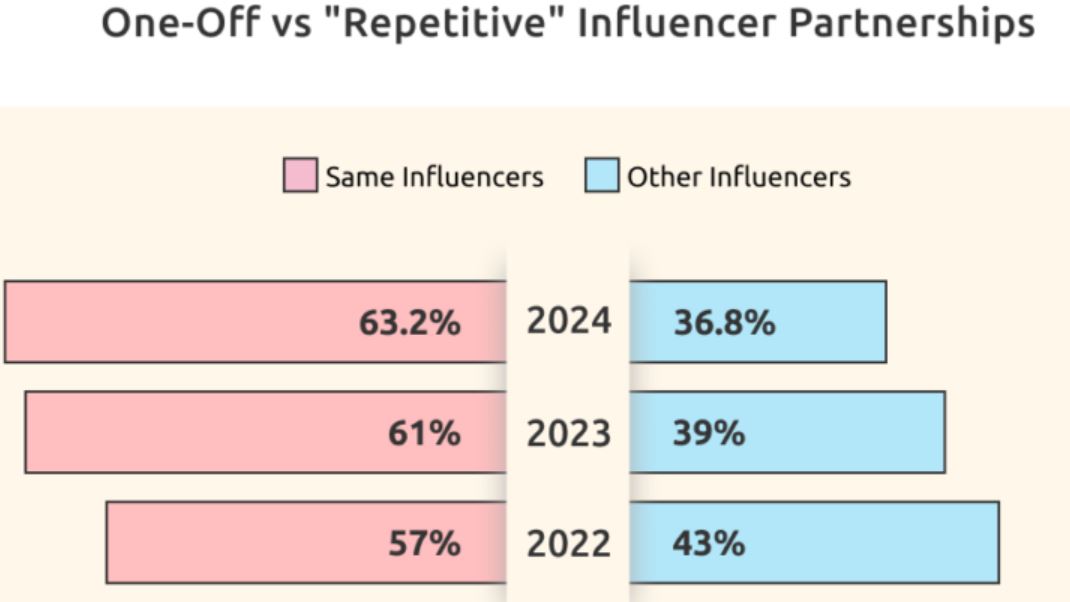
- According to Influencer Marketing Statistics, in 2024, the majority of respondents, around 63.2%, claimed they used the same influencers.
- Similarly, 61% of respondents in 2023 and 57% in 2022 used the same influencers.
- Meanwhile, 36.8% in 2024 (down from 39% last year and 43% in 2022) used other influencers or had only one campaign.
Influencer Marketing by Top Leading Agencies 2025
| Name of Influencer Marketing Agencies | Influencer campaigns, budgets, and other details |
| Mediakix |
|
| Viral Nation |
|
| Takumi |
|
| The Influencer Marketing Factory |
|
| Traackr |
|
| HireInfluence |
|
| Obviously |
|
| IZEA |
|
| Pulse Advertising August United |
|
| Pulse Advertising |
|
Artificial Intelligence (AI) And Machine Learning (ML) Usage in Influencer Campaigns
- Influencer Marketing Statistics in 2025 show that almost 67% of respondents said that using AI and ML has become an effective criterion for identifying influencers and creating effective campaigns.
- In the same duration, along with 30% who were unsure, only 12% answered clearly no to the question, saying they would not use AI and ML.
The Main Purpose of AI And ML Usage
- In 2025, AI-enabled influencer discovery and campaign optimization were used by approximately 60.2% of marketers.
- The second most common use of AI in influencer marketing is finding and sharing relevant content (18.6%).
- Interestingly, 5.7% of respondents plan to use AI to spot fake influencers and fake engagement, similar to last year.
How Does AI Impact Influencer Marketing?
(Reference: cdn.shopify.com)
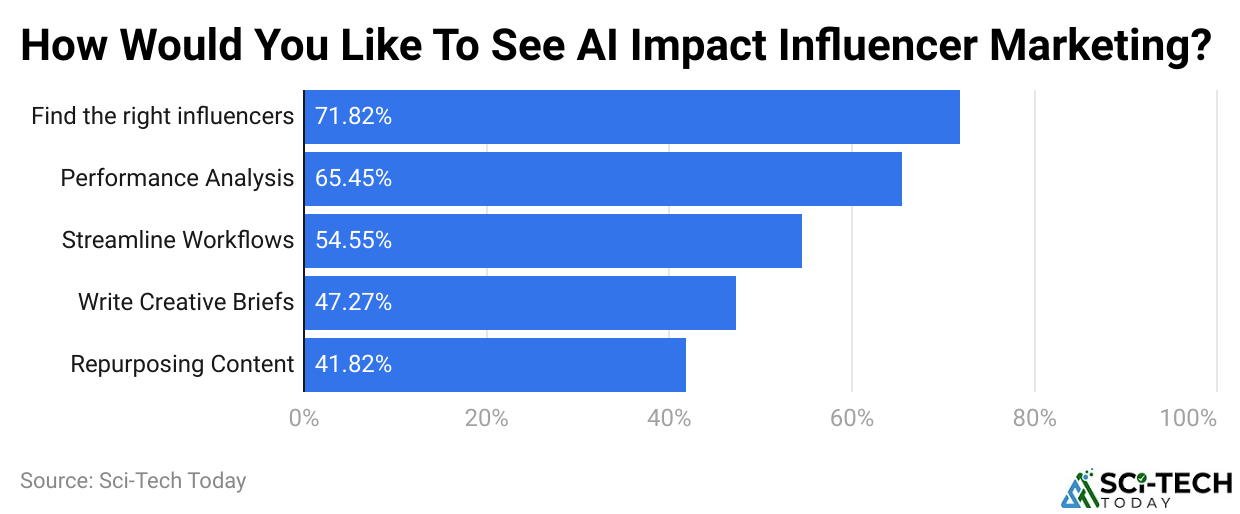
- Influencer Marketing Statistics for 2025 show that around 75% of marketers want AI to help them choose the best influencers for their campaigns.
- Other AI impacts of influencer marketing include performance analysis (65.45%), streamlined workflows ( 47.27%), writing creative briefs (47.27%), and repurposing content (41.82%).
Influencer Marketing Industry Statistics
(Reference: 99firms.s3.us-west-1.amazonaws.com)
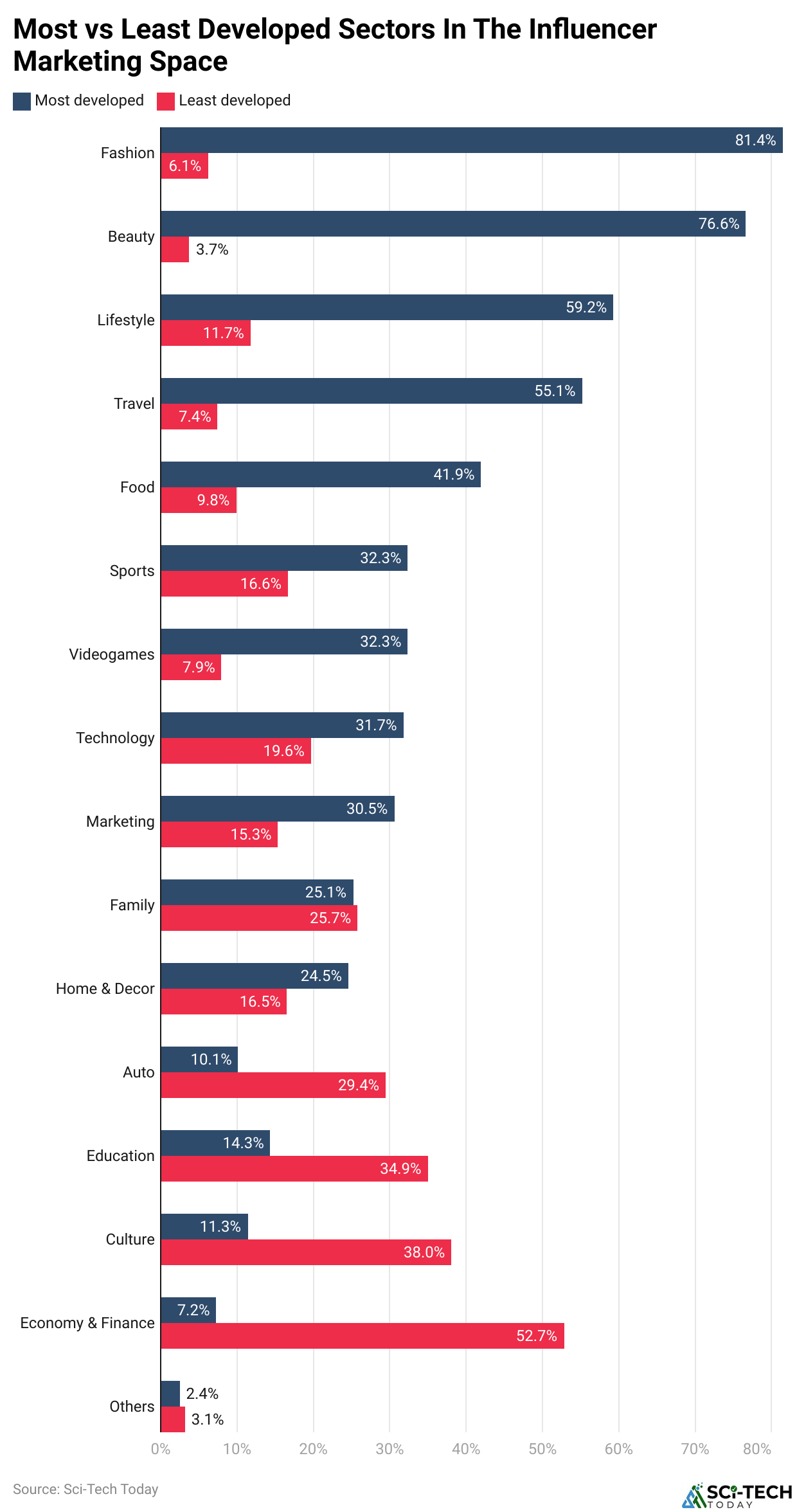
- Influencer Marketing Statistics in 2024 as well as in 2025, state that the top three most developed sectors in the influencer marketing space are fashion (81.4%), Beauty (76.6%), and Lifestyle (59.2%).
- However, the three least developed sectors are economy and finance (52.7%), culture (38%), and education (34.9%).
- Others followed by others during the same duration: travel (55.1%), food (41.9%), sports (32.3%), video games (32.3%), technology (31.7%), marketing (30.5%), family (25.1%), home and decor (24.5%), and auto (10.1%).
The Popular Fashion Niches for Influencer Marketing
(Reference: mydmi.imgix.net)
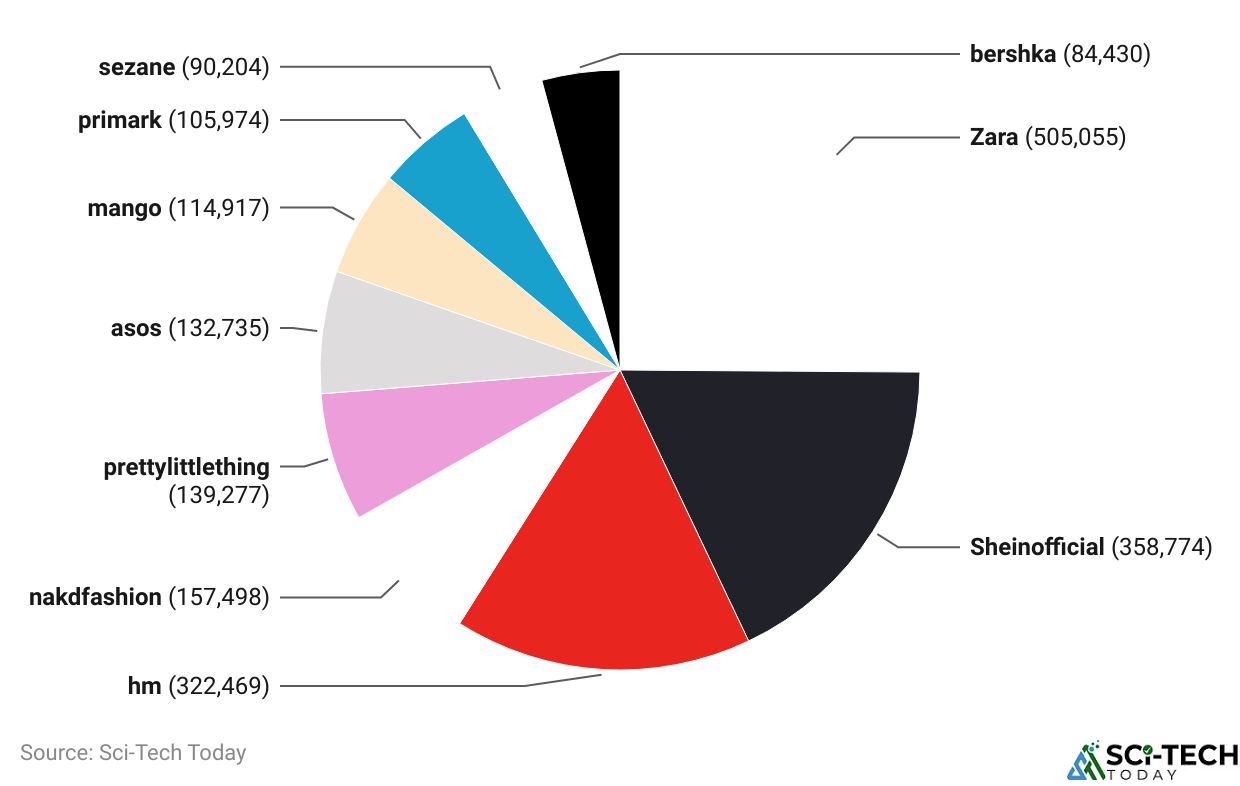
- In 2023, Zara retained its leadership position in influencer marketing with around 505,055 mentions.
- The Chinese brand SheIn, which has been controversial, was mentioned 358,774 times and took second place.
- H&M is still a popular brand with influencers, getting a total of 322,469 mentions.
- Other most popular fashion niches for influencer marketing by mentioned times are NA-KD Fashion (157,498), Pretty LittleThing (139,277), ASOS (132,735), Mango (114,219), Primark (105,974).
Types of Influencers Preferred by Brands
(Reference: influencermarketinghub.com)
- Influencer Marketing Statistics also show that in 2025, almost 48% of brands are choosing nano-influencers (1K to 10K followers) as partners, up 40% from last year.
- Similarly, at the same time, only 27% of brands now choose micro-influencers (10K to 100K followers), which is lower than the previous 30%.
- In 2025, fewer brands now focus on larger influencers, with only 18% choosing macro-influencers (100K to 1M), down from 19% in 2023.
- The percentage of mega or celebrity influencers increased slightly to 15% in 2025, up from 12% the previous year.
Influencer Marketing by Ways to Pay Influencers
- Around 40.8% of brands offer money, and 30.8% give free product samples to influencers.
- 18.9% of brands give influencers discounts on their products and services, especially for more expensive items.
- A smaller 9.4% of brands offer influencers entry into giveaways as a way of payment for their collaboration.
The table below illustrates the popular way to share a comparison between 2023 and 2024:
| Ways | 2024 | 2023 |
| Wire Transfer | 29.2% | 28% |
| PayPal | 27.2% | 29% |
| Manually | 25.1% | 25% |
| 3rd-Party Payment Service | 18.5% | 17% |
Effective Ways to Attract Sales Statistics
- According to Influencer Marketing Statistics, 29.9% of people relied on email addresses as the most common means, while referral links constituted the second most popular means used by 28.4% of people.
- Coupon codes (14.7%), product SKUs (4.2%), and others (21%) constitute some other means of attracting sales share.
By Influencer Payment System
(Reference: influencermarketinghub.com)
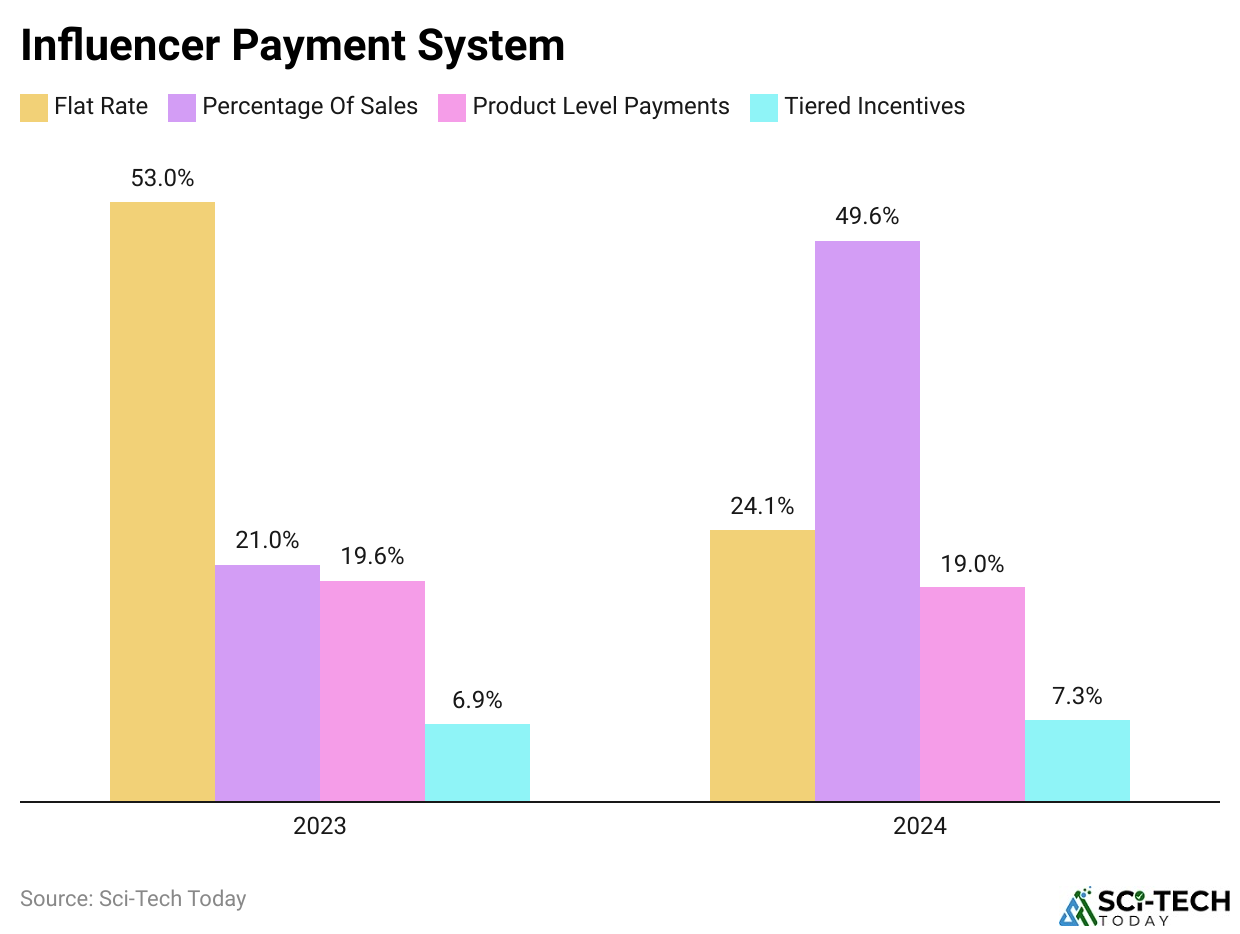
- In 2024, sales-share or affiliate-style compensation was the most commonly reported influencer-payment model, used by 49.6% of respondents. Flat-rate payments accounted for 24.1%.
- Product-based payments represented 19.0% of reported compensation arrangements, while tiered incentives accounted for 7.3%.
- As of 2024, payment system statistics in influencer marketing are stated as flat rate (24.1%), sales share (49.6%), product level payments (19%), and tier incentives (7.3%).
The Popular Use of Influencer Platforms
(Source: influencermarketinghub.com)
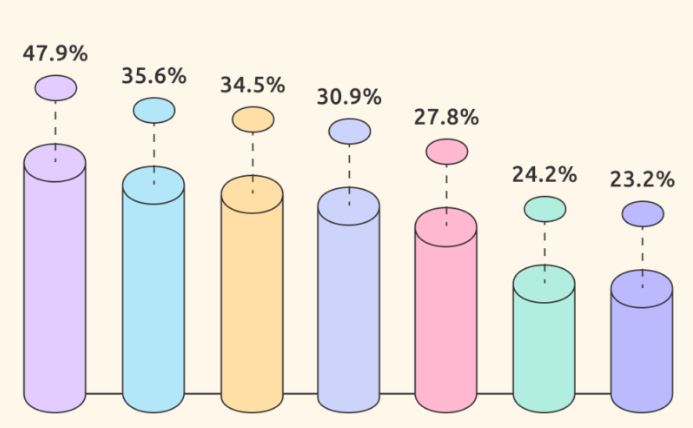
- Influencer Marketing Statistics further states that the most popular use of influencer platforms is at 49% in 2025, a slight increase from last year’s 47.9%.
- Furthermore, other common uses of influencer platforms include automating campaigns, automation and reporting (35.6%), paying influencers (34.5%), analyzing fake followers and fraud (27.8%), amplifying paid content (24.2%), and tracking conversions (23.2%).
Primary Factors for Influencer Evaluation
- In 2025, almost 32.9% of people think views, reach, and impressions are the most important, a drop from 35% last year.
In addition, other factors for comparison in influencer evaluation are stated below:
| Factors | 2024 | 2023 |
| Content Type/Category | 21.1% | 19% |
| Sales | 18.4% | 18% |
| Engagement/Clicks | 16.4% | 17% |
| Others | 11% | |
The ROI of Influencer Marketing Statistics
- In 2025, influencer marketing gives an average return of USD 5.78 for every USD 1 spent, making it one of the best digital marketing methods.
- 89% of marketers believe the return on investment (ROI) from influencer marketing will be equal to or better than other marketing methods in 2025.
- Micro-influencers, with 10,000 to 50,000 followers, provide a higher ROI than famous influencers, with an engagement rate of about 3.86%.
- Brands that use influencer marketing see 11x higher ROI compared to regular digital advertising.
- 62% of marketers plan to increase their budgets for influencer marketing because of the high returns they get.
- Influencer campaigns on video platforms like TikTok and YouTube bring in 5x higher ROI compared to platforms that use static content.
- In 2025, 54% of marketers will use ROI as the main measure of the success of their influencer campaign.
- 70% of businesses see positive ROI within six months of starting influencer marketing campaigns.
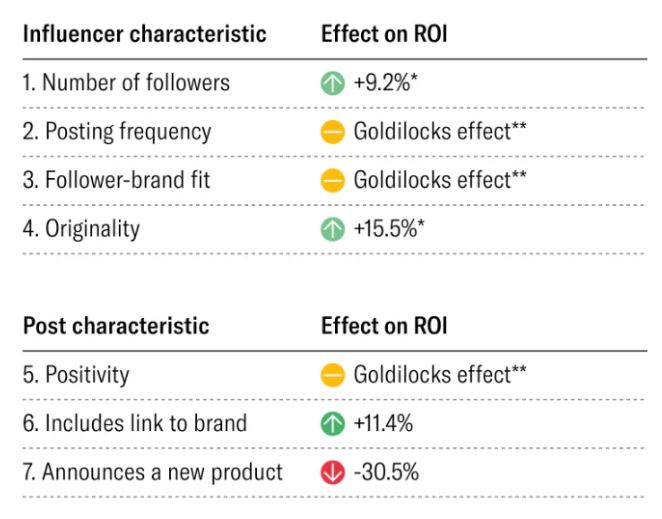
What Drives Influencer Marketing ROI?
(Source: cdn.shopify.com)
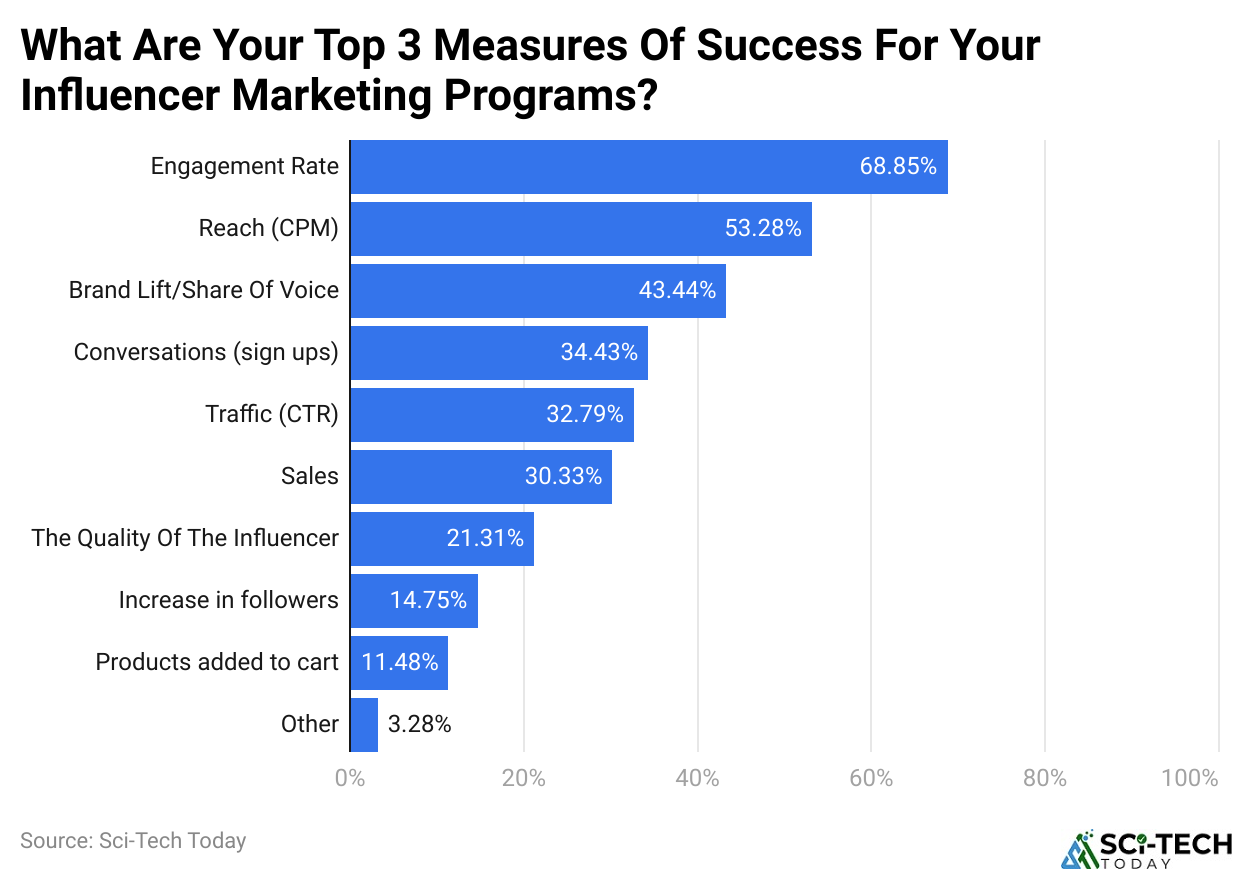
The Most Popular Way to Measure Influencer Success
(Reference: cdn.shopify.com)
- Only 68.85% of marketers think engagement rate is a way to measure success when evaluating their campaigns’ return on investment (ROI).
- Furthermore, other measures of success for influencer marketing programs are reach (53.28%), brand lift/share of voice (43.44%), conversion (34.43%), traffic (32.79%), sales (30.33%), the quality of the influencer (21.31%), increase in followers (14.75%), products added to cart (11.48%), and other (3.28%).
The Top 5 Influencer Marketing Challenges, 2025
#1. Measuring ROI (Return on Investment)
- 80% of marketers have a hard time figuring out the exact return on investment (ROI) from influencer marketing campaigns.
#2. Finding the Right Influencers
- 70% of marketers find it difficult to choose influencers who match their brand’s values and reach the right audience.
#3. Fake Followers and Influencer Fraud
- About 15% of influencer accounts are involved in fraud, such as using fake followers or engagement to appear more popular.
#4. Keeping up with Platform Changes
- 62% of marketers find it hard to stay updated with constant changes in algorithms and features on platforms like Instagram, TikTok, and YouTube.
#5. Budgeting and Resource Allocation
- 61% of brands find it hard to set enough money aside for influencer marketing, especially because the cost of working with influencers keeps going up.
Statistics on Consumer Behaviour Towards Influencer Marketing
- 61% of consumers trust influencer recommendations more than brand advertisements.
- 58% of people say they have made a purchase based on an influencer’s recommendation in 2024.
- Consumers are four times more likely to purchase when an influencer they follow endorses a product than when traditional ads do.
- 43% of Gen Z and millennials follow at least one influencer whose recommendations influence their purchasing decisions.
- 54% of consumers prefer influencers who share authentic, personal stories over polished or scripted content.
- 35% of consumers are more likely to buy from a brand after seeing influencer content multiple times on social media.
- 29% of consumers are wary of influencers who promote too many products, finding them less trustworthy.
The End
In 2025, influencer marketing has become a strong tool for brands, helping them get more engagement, better brand awareness, and higher returns compared to traditional marketing. Platforms like TikTok, Instagram, and Facebook are important for reaching different audiences, especially younger people.
However, marketers still face problems like measuring ROI, finding the right influencers, and handling fake followers. Even with these challenges, the industry is expected to grow as more brands plan to increase their influencer marketing budgets.
FAQ
Influencer marketing connects brands with social media creators who have dedicated online followings. These partnerships build brand trust, boost product awareness, and drive direct sales by using personal recommendations instead of standard corporate advertisements.
Gen Z likes influencers because they feel real, relatable, and trustworthy compared to traditional celebrities.
The number one most-followed individual influencer in the world is Cristiano Ronaldo, with over 940 million total cross-platform followers and roughly 678 million followers on Instagram alone.

Sources