









Opening
Online Interview Statistics: An online interview is now one of the most common ways for companies to hire new employees. Instead of meeting in person, employers and candidates connect through video call platforms like Zoom, Microsoft Teams, or Google Meet. It saves time, reduces travel costs, and makes it easier to attend interviews from anywhere. However, doing well in an online interview takes more than having a good resume.
You also need a stable internet connection, a quiet place, and the confidence to communicate clearly on camera. With the right preparation and professional attitude, you can leave a strong first impression and increase your chances of getting the job.
Featured Picks
- Around 86% of companies worldwide now use online interviews as a standard hiring practice.
- Businesses can reduce recruitment costs by up to 50% through virtual interviews by eliminating travel and administrative expenses.
- Online hiring workflows can shorten hiring time from 30 days to 5.8 days, improving recruitment speed by nearly 80%.
- About 80% of job seekers prefer online interviews because they offer greater flexibility and convenience.
- Nearly 20% of organizations use AI-powered interview platforms to automate candidate screening and initial interviews.
- Zoom remains the leading interview platform, with about 55% of recruiters using it for virtual interviews.
- Around 79% of hiring managers use video interview technology to evaluate candidates during recruitment.
- North America accounts for 43% of the global online recruitment market, making it the largest regional market.
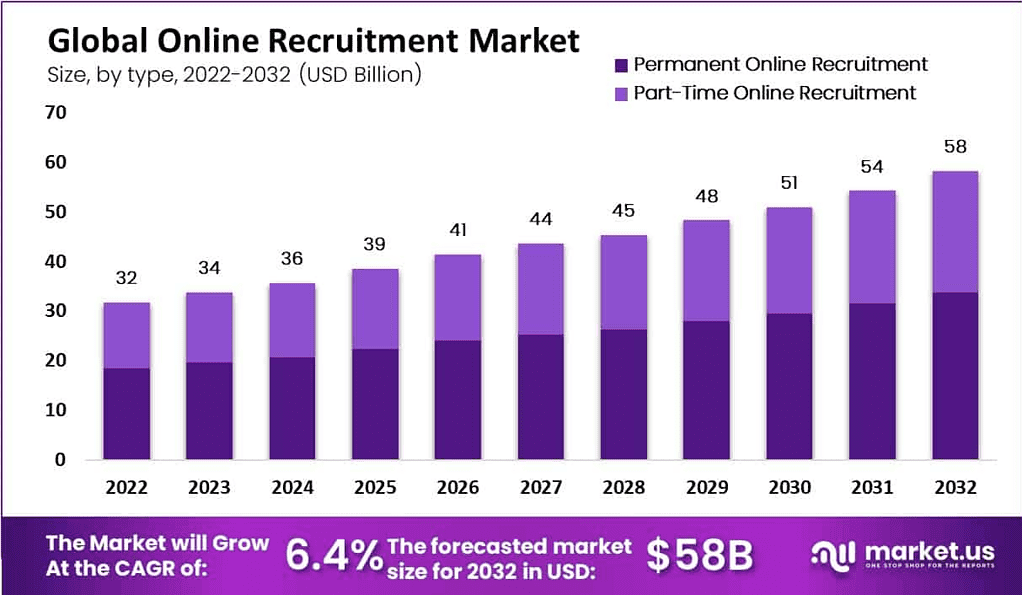
- The global online recruitment market is expected to grow from USD 41 billion in 2026 to USD 58 billion by 2032, at a 6.4% CAGR.
- LinkedIn has over 1.3 billion members worldwide, while more than 9,000 job applications are submitted on the platform every minute.
Key Online Interview Statistics
- According to Marketbiz, around 86% of companies worldwide now use online interviews, and this trend has remained strong even after the COVID-19 pandemic.
- Businesses can reduce recruitment expenses by up to 50% by cutting travel and other hiring costs.
- Virtual interviews help employers reach qualified candidates from around the world without location barriers.
- About 80% of job seekers prefer online interviews because they can join from anywhere with an internet connection.
- Nearly 20% of companies use AI-powered interview platforms to screen applicants and conduct initial interviews.
- Online interviews allow recruiters to complete more interviews each day, reducing time-to-hire by 30%-40%.
- During the pandemic, 55% of companies increased their use of virtual hiring methods.
- Around 70% of candidates say online interviews improve their experience by making the hiring process more convenient and efficient.
Global Online Recruitment Market Size
(Source:market.us)
- The global online recruitment market is valued at about USD 39 billion in 2025 and is expected to grow to nearly USD 41 billion in 2026.
- Market forecasts suggest the industry will reach approximately USD 58 billion by 2032.
- Between 2022 and 2032, the market is projected to expand at a 6.4% CAGR.
Regional Analysis of the Global Online Recruitment Market
- According to Market.us Scoop, North America leads the global online recruitment market with a 43% share.
- Europe accounts for 24.0% of the market, while Asia-Pacific (APAC) holds 22.5%.
- Latin America represents 5.3% of the market, and the Middle East & Africa (MEA) contributes 5.2%.
Positive Impact of Online Hiring Statistics by Wider Reach and Faster Hiring
- According to hiringlab.org, online job boards can reduce advertising costs by up to 80%.
- The online recruitment technology market is projected to reach USD 17.48 billion in 2026.
- Digital hiring workflows can reduce hiring time from 30 days to 5.8 days, an improvement of about 80%.
- About 68% of companies report better hiring outcomes through remote recruitment.
By Cost Savings and Better Candidate Experience
- Fountain’s report further stated that online hiring lowers recruitment costs, with the average non-executive cost-per-hire estimated at USD 5,475.
- About 60% of job seekers leave applications that are too long, making simple online application processes more effective.
- Automated updates and interview scheduling improve communication and candidate satisfaction.
By Improved Hiring Quality and Future Growth
- According to employmentconnections.bc.ca, AI-powered screening increases interview success rates by about 14%, while 67% of recruiters report better hiring efficiency with AI.
- Around 76% of companies report higher employee retention after adopting remote work practices.
- Fortune Business Insights shows that the online recruitment technology market is projected to grow from USD 17.48 billion in 2026 to USD 46.07 billion by 2034, at a 12.9% CAGR, reflecting continued investment in digital hiring.
Online Job Search and Job Platform Statistics
- The SQ Magazine report further noted that around 70% of U.S. job seekers use online job platforms as their primary method for finding employment opportunities.
- Nearly 56% of candidates apply for jobs through mobile apps or online job boards rather than traditional methods.
- More than 9,000 job applications are submitted every minute through LinkedIn.
- Around 45% of workers found their most recent job through an online platform.
- Nearly 80% of millennials use digital job marketplaces to research employers and apply for jobs.
- Job platforms connected with social networks achieve up to 40% higher candidate engagement than traditional job boards.
Online Interview App Usage Statistics, 2026
- Around 64% of job seekers prefer mobile-friendly interview platforms, encouraging companies to optimize interviews for smartphones and tablets.
- Zoom remains the most widely used online interview platform, with about 55% of recruiters using it for individual and panel interviews.
- Microsoft Teams holds roughly 20% of the global collaboration market and is widely used by large organizations for structured hiring.
- Google Meet accounts for around 15% of the market and is popular among businesses using Google Workspace.
- Skype represents only about 5% of online interview usage as newer platforms continue to replace it.
- Cisco Webex and HireVue together account for about 5% of online interview usage, with HireVue commonly used for AI-powered video interviews in sectors such as technology and finance.
By Age Demographics
- According to Recruiter Flow, in 2026, around 73% of job seekers aged 18-34 found their latest job through social media.
- Overall, 81% use social media, while 60% rely on online job boards, as per Novo Resume.
- Among unemployed people aged 16-24, about 67% visit online recruitment websites, compared with 61% of employed people in the same age group.
- The online recruitment platform market is expected to grow from USD 57.70 billion in 2025 to USD 64.66 billion in 2026, supported by rising adoption across the Asia-Pacific.
- Around 84% of organizations use social media for hiring. Applicant tracking systems are used by 97.4% of Fortune 500 companies, 67% of large businesses, and 35% of small businesses.
- About 44% of Baby Boomers rely on personal networks, while only 28% of Gen Z do. Nearly 20% of Gen Z applicants secured interviews through TikTok.
Online Interview Timelines
- According to curriculo.me, in 2026, the average online time‑to‑hire across sectors is around 24-30 days.
- The average online time‑to‑fill, including posting, sourcing, and interviews, is about 45 days for most industries.
- Moreover, the Dover report further stated that in technology and SaaS, online hiring typically takes 30-40 days, and for complex roles, time‑to‑hire can reach 42-50+ days.
- In manufacturing and engineering, online recruitment often needs around 40-55 days because of technical checks and compliance.
- According to Scribd, Healthcare roles filled through online interviews usually take 35-50 days, with some medtech positions requiring about 56 days.
- Retail and hospitality jobs, which rely heavily on online interviews for volume hiring, are often filled within 15-25 days.
- Government online interview processes are slower, frequently extending to 45-60+ days due to formal procedures and approvals.
Interview Outcomes by Number of Job Applications
(Source: zippia.com)
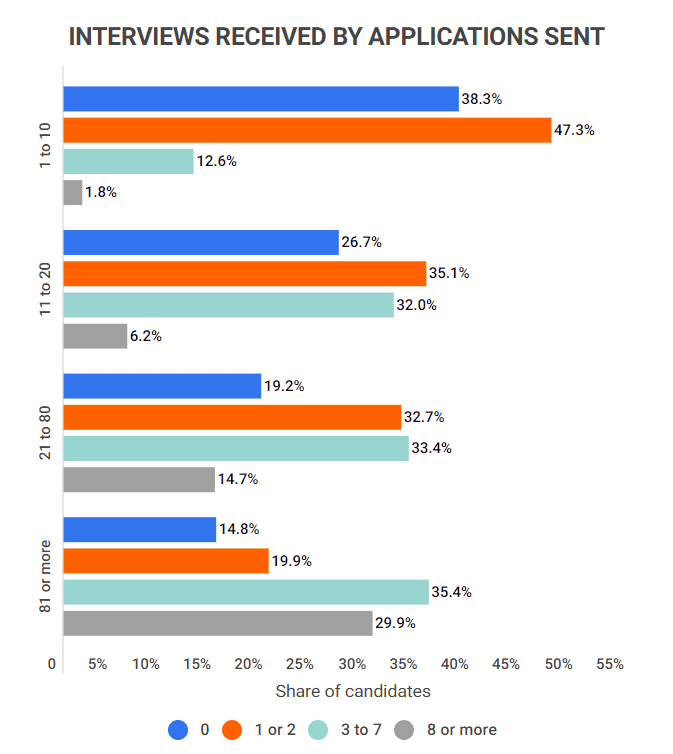
| Number of Jobs Applying | 0 Interviews | 1 or 2 Interviews | 3 to 7 Interviews | Eight or more Interviews |
| 1-10 | 38.3% | 47.3% | 12.6% | 1.8% |
| 11-20 | 26.7% | 35.1% | 32.0% | 6.2% |
| 21-80 | 19.2% | 32.7% | 33.4% | 14.7% |
| 81 or more | 14.8% | 19.9% | 35.4% | 29.9% |
Video Interview Statistics
(Source: images. surferseo.art)
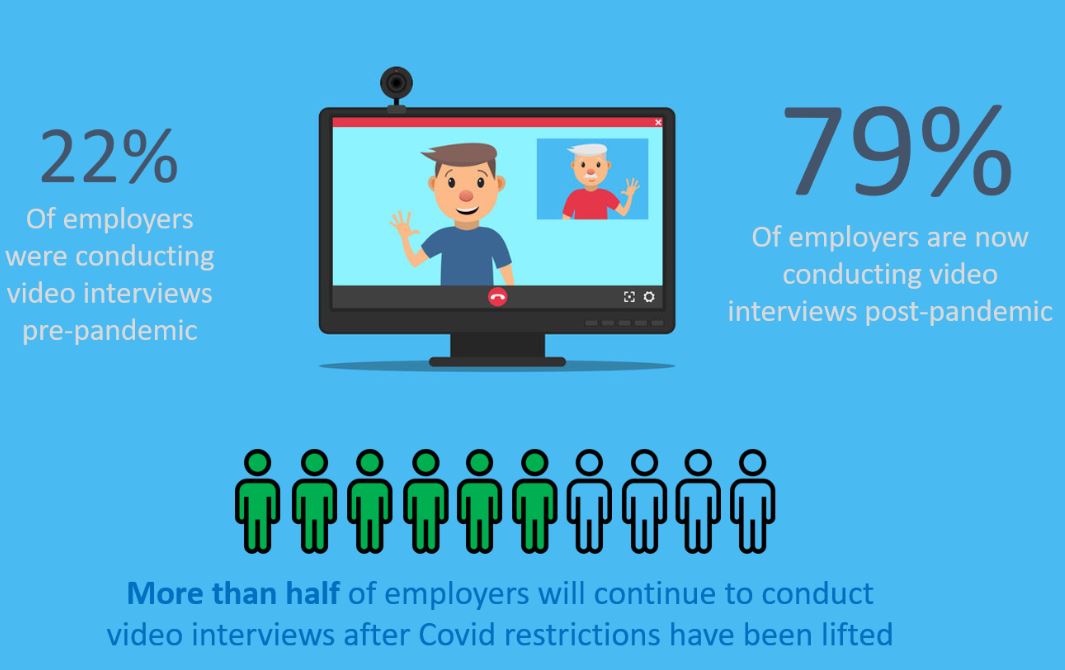
- In recent years, 79% of hiring managers use video technology to interview and assess candidates, a significant increase.
- 60% of recruiters use video interviews regularly, regardless of whether the job is remote or in-office.
- There was a nearly 67% increase in video interviews compared to pre-pandemic levels. Video interviews have gained significant traction and are now a staple in many recruitment processes, even for non-remote roles.
- Online Interview Statistics further states that around 82% of employers plan to continue using virtual interviews in their recruitment process post-COVID.
- Around 74% of recruiters say that video interviews have made the process easier for them by streamlining candidate assessment and reducing scheduling issues.
Users of Leading Online Job Platforms
(Source: sqmagazine.co.uk)
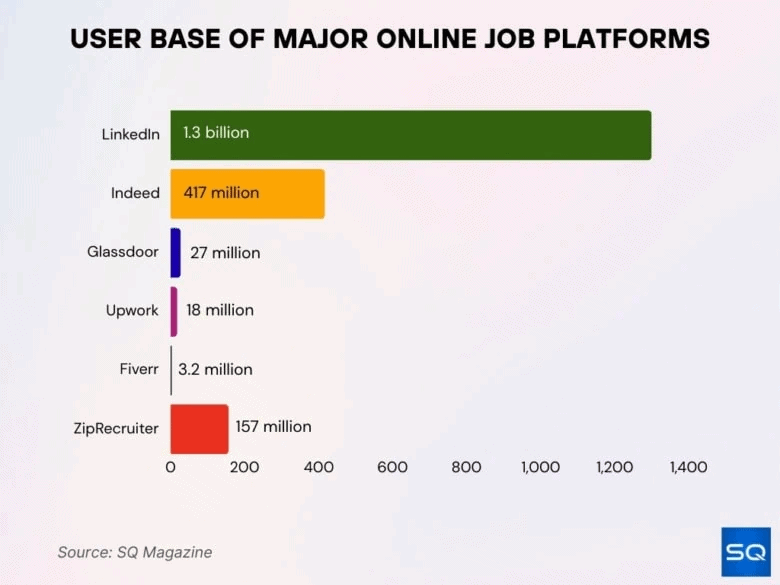
- LinkedIn has surpassed 1.3 billion members worldwide, making it one of the largest professional networking platforms.
- Indeed receives more than 417 million monthly visitors, while Glassdoor attracts around 27 million monthly users.
- Upwork has over 18 million registered freelancers.
- Fiverr serves more than 3.2 million active buyers, and ZipRecruiter has over 157 million job seeker profiles.
- Around 77% of job seekers use social media platforms to research employers and job opportunities.
Online Interview Statistics Based On Duration
- Around 61% of senior executives say the best time for interviews is between 9 AM and 11 AM.
- Phone interviews usually take about 15 minutes to complete, giving enough time for quick questions and answers.
- In 2024, the average length of the job interview process in the United States remains around 23.8 days.
- In most cases, it usually takes 20 to 40 days to get a job offer after an interview.
- Recruiters typically spend about two-thirds of their total hiring time conducting job interviews during the recruitment process.
- Recruiters typically spend about two-thirds of their total hiring time conducting job interviews during the recruitment process.
Average Interview Duration per Stage
| Interview type/metric | 2026 statistic (time/share) |
| Recruiter screening interview | Typically lasts 15-30 minutes per candidate. |
| Hiring manager interview | Generally takes 30-45 minutes for each candidate. |
| Panel interview | Usually lasts 45-60+ minutes as multiple interviewers assess the candidate together. |
| One‑way video interview | Candidates typically need 10-30 minutes to record responses that recruiters review later. |
| Total interview time for successful hire-business roles | On average, candidates spend around 2.4 hours in interviews across the full process. |
| Total interview time for successful hire-technical roles | On average, candidates spend about 3.5 hours in interviews across all rounds. |
| Recruiter time share-schedule coordination | Recruiters spend about 38% of their workday coordinating interview schedules. |
| Recruiter time share-active recruiting | Only around 35% of recruiter time is devoted to active recruiting (sourcing, screening, interviewing). |
| Shortest live interview stage | Recruiter screening is the shortest live stage at 15-30 minutes. |
| Longest live interview stage | Panel interviews are the longest live stage at 45-60+ minutes. |
Online Interview Usage by Country Statistics, 2026
- According to Recruit BPM, around 86% of companies worldwide use online interviews, with the highest adoption in North America, the U.K., and Asia-Pacific.
- North America holds 43% of the global online recruitment market, reflecting strong use of virtual hiring tools.
- standOut CV also shows that in the U.K., 9 in 10 companies use video interviews for initial screening, while 62% of candidates report technical issues during virtual interviews.
- In India, about 90% of employers use video interviews for the first stage of recruitment.
- In the U.S., around 86% of organizations use virtual interview technology, 60% of recruiters conduct video interviews, and 70% of candidates still prefer in-person interviews.
- In Germany, the median hiring process can take about 55 days, despite the widespread use of digital recruitment practices.
Advantages and Disadvantages of Online Interviews
| Advantages | Disadvantages |
| Online interviews save up to 60% of hiring time by removing travel and cutting scheduling delays. | 38% of candidates face technical problems, such as poor internet or audio issues, during interviews. |
| 92% of recruiters say virtual interviews help them reach a wider and more diverse talent pool. | 67% of hiring managers find it harder to build personal connections with candidates online. |
| 75% of companies use online platforms to conduct panel interviews with remote team members. | 55% of recruiters feel they miss important non‑verbal cues like body language and facial expressions. |
| 85% of hiring managers say recorded interviews improve collaboration and speed up hiring decisions. | 62% of candidates experience video meeting fatigue after long virtual interview sessions. |
| 70% of employers value secure interview platforms to protect data during online interviews. | 45% of people report technology‑related bias affecting their interview experience. |
| 67% of employers use interview recordings to support fair and consistent evaluations. | About 30% of candidates do not have reliable internet for smooth online interviews. |
| Recorded interviews allow teams to review candidate responses more than once, improving decision quality. | 27% of candidates worry about security issues in virtual interview platforms. |
| Online interviews reduce travel costs for companies and candidates, supporting efficient hiring. | 59% of candidates notice bias based on their technical setup, such as camera or microphone quality. |
| Virtual interviews help global teams join discussions easily across locations and time zones. | 44% of candidates face distractions at home or in shared spaces during online interviews. |
Conclusion
This online interview statistics article covers detailed analyses of online interviews along with recent data. Online interviews have become an essential part of modern hiring processes. This shift has brought many advantages, such as improved flexibility, quicker hiring timelines, and the ability to interview remote candidates.
However, challenges like technical glitches and internet issues persist. As companies and candidates adapt to this format, online interviews are expected to continue to play a significant role in recruitment, offering a more streamlined and efficient way to connect with talent globally.
FAQ
Choose a quiet, well-lit space with a stable internet connection and a distraction-free background.
Look at the camera while speaking, and glance at the screen naturally when listening or taking cues.
Stay calm, identify the issue, restart devices, check connections, follow guides, and seek technical support if needed.

Sources