








Opening Statement
Weight Loss Statistics: Losing weight is not just about looking better; it is about living a healthier and happier life. A healthy weight can improve your energy, lower the risk of diseases like diabetes and heart disease, and boost your confidence. While many diets promise quick results, lasting weight loss comes from simple habits like eating balanced meals, staying active, sleeping well, and being consistent. There is no magic solution or one-size-fits-all plan. Small, steady changes often lead to the best results.
This guide will help you understand healthy weight loss, clear up common myths, and share practical tips to achieve and maintain your goals safely.
Top Recommendation
- Nearly 49% of U.S. adults try to lose weight every year, including 56.4% of women and 41.7% of men.
- Around 95% of people want to lose weight mainly to improve their overall health and well-being.
- Losing just 5%-10% of body weight can significantly improve blood pressure, cholesterol, and blood sugar levels.
- The global weight loss market is expected to grow from USD 355.9 billion in 2026 to USD 532.5 billion by 2032.
- The U.S. weight loss market reached USD 135 billion in 2025 and is projected to grow by 6.6% in 2026.
- Prescription obesity medicines generated USD 43.48 billion in 2025, reflecting the rapid adoption of GLP-1 therapies.
- About 11% of Americans use GLP-1 medicines for weight loss in 2026, up from 3% in 2024, while 91% are aware of these medicines.
- The global weight loss supplement market is forecast to increase from USD 43.28 billion in 2026 to USD 140.16 billion by 2035, at a 13.98% CAGR.
- Around 81% of adults living with obesity worldwide have either been advised to lose weight or have considered doing so.
- Semaglutide, the active ingredient in Ozempic and Wegovy, generated USD 26 billion in sales in 2024 and continues to grow by about 40% annually.
General Weight Loss Statistics
- The increase in the Weight loss market reflects the increasing demand for weight loss solutions, including dietary programs, fitness regimens, supplements, and medical interventions.
- Globally, the industry’s growth is expected to contribute to a 3% increase in health-related expenditures by 2025.
- In the U.S., every 12 months, almost 49% of adults are trying to lose weight.
- Of these, 56.4% are women, and 41.7% are men.
- Exercising and dieting are the top-prioritized methods of weight loss, and 62.9% of people practice each.
- Weight Loss Statistics in 2024 also mentions that a significant majority, 95% of individuals, express a desire to lose weight primarily for the sake of their well-being.
- Achieving a modest weight loss of just 5% to 10% of one’s body weight can lead to significant improvements in overall health, including better blood pressure, cholesterol levels, and blood sugar control.
- Additionally, individuals who lose weight at a gradual pace of 1-2 pounds per week are more likely to maintain their weight loss over the long term.
- The Centers for Disease Control and Prevention (CDC) advises individuals to engage in 150 minutes of moderate aerobic exercise each week.
- As mentioned in Weight Loss Statistics, 75 minutes of vigorous exercise or a blend of moderate and vigorous activities is recommended to achieve the recommended amount of physical activity.
- Based on the reports of the 2020-2025 Dietary Guidelines for Americans, over 80% of the population consumes diets that lack adequate amounts of vegetables, fruits, and dairy products.
(Source: greatgreenwall.org)
Weight Loss Statistics By Types
Exercise
- To achieve the recommended amount of physical activity, people should engage in around 75 minutes of vigorous exercise or a blend of moderate and vigorous activities.
- A report published by the World Health Organization, a lack of sufficient exercise can lead to a 20-30% increase in mortality rates.
- In 2024, nearly half of all adults, specifically 46.9%, engage in the recommended level of aerobic activity.
- Only 24.2% of individuals manage to incorporate the optimal combination of both aerobic and resistance exercises into their fitness routines.
- Weight Loss Statistics also show that around 19.3% of Americans participate in sports or engage in exercise.
- Among them, men tend to be slightly more active, with 20.7% reporting regular exercise, compared to 18% of women who do the same.
- On average, when Americans engage in physical exercise, they report spending approximately half an hour on their workouts.
- Additionally, Vermont (28.5%) and Kentucky (15.3%) have the highest and lowest exercise rates, respectively.
Supplement Use
- As per Weight Loss Statistics, in 2024, 15% of U.S. adults will rely on supplements to aid in weight loss.
- This practice is more common among women, with 21% of them using some form of weight loss supplement, while about 10% of men also turn to these products for their weight management efforts.
- Every year, the sale of weight loss supplements alone generates approximately USD 2.1 billion in revenue.
Physical Activity
- Approximately 64 million Americans hold gym memberships, representing one-third of the total global figure, which stands at 184.61 million gym memberships worldwide.
- Weight Loss Statistics also show that bicycling stands as the most popular form of exercise in the United States, with 51.4 million Americans reporting that they ride a bike at least once a year.
- Around 49 million people in the country prefer running or jogging, but the popularity of these activities is gradually decreasing.
- Besides, 94% of individuals who achieve weight loss tend to increase their physical activity, with many opting to incorporate more walking into their daily routines.
- An average of one hour of physical exercise each day successfully helped 90% of individuals lose weight in 2024.
By Diet
- In recent years, 40% of American people have dieted to lose weight, and 30% to avoid gaining weight.
- Meanwhile, 58% of these individuals report snacking at least once a day, with nearly 25% indicating that they snack multiple times throughout the day.
- The International Food Information Council report shows that one out of every ten individuals on a diet relies on calorie counting to manage their weight.
- 80% of individuals attempt multiple methods to lose weight, and 10 out of the top 11 methods are related to food.
- CDC reports further depict that 17.1% of adults are currently on a diet, which is significantly lower than the nearly 30% who are actively engaged in weight-loss efforts.
Global Weight Loss Market Outlook
(Source: globenewswire.com)
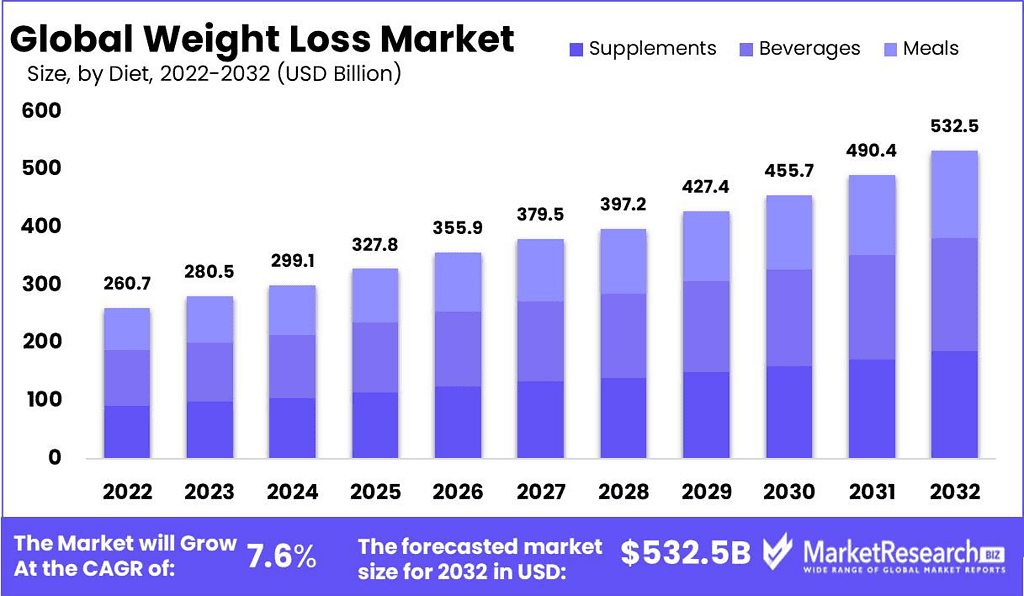
- The global weight loss market, covering supplements, beverages, and meals, is growing steadily and is projected to expand at a CAGR of 7.6% from 2022 to 2032.
- Market size stood at USD 327.8 billion in 2025 and is estimated to reach USD 355.9 billion in 2026.
- By 2032, the market is forecasted to touch USD 532.5 billion.
U.S. Weight Loss Market Statistics
- According to Market Data Enterprises, the U.S. weight loss market was valued at USD 135 billion in 2025, including revenue from health clubs. The market is expected to grow by 6.6% in 2026.
- Commercial weight loss companies, including WeightWatchers, Nutrisystem, Jenny Craig, and Medifast, reported a combined 24% revenue decline to USD 1.86 billion in 2025 because of strong competition from GLP-1 medications.
- Medical weight loss programs accounted for 38% of the total market, reaching USD 51.5 billion in 2025, up from 11% in 2022.
- Bariatric surgeries declined by 8% in 2024 and another 6% in 2025, falling to 232,000 procedures.
- The prescription obesity drug market grew 64% to USD 43.48 billion.
- The meal replacement and over-the-counter appetite suppressant market was worth USD 4.2 billion.
- In 2025, WeightWatchers revenue fell 11%, while Medifast revenue dropped 36%.
U.S. Obesity Trends and Health Impact
- Forbes report stated that in 2026, 36.4% of U.S. adults have obesity, down from 39.9% in 2022.
- Wellness Goal BMI estimates place the obesity rate at around 40%.
- Obesity contributes to nearly 280,000 deaths every year in the United States.
- The total economic cost of obesity is estimated at USD 445 billion in 2026, including healthcare expenses and lost workplace productivity.
- Overall, more than one in three U.S. adults are living with obesity, making it a major public health and economic challenge.
Weight Loss Goals and Consumer Behavior
- According to US News shows in 2026, 52% of Americans say they want to lose weight.
- However, only 26% report making a serious effort to lose weight, showing a large gap between intention and action.
- Weight-loss interest is higher among women (58%) than men (46%).
- Gallup stated that around 41% of U.S. adults describe themselves as at least somewhat overweight.
- The average self-reported body weight is 181 pounds overall, including 163 pounds for women and 198 pounds for men.
GLP-1 Medications Drive the Weight Loss Market
- About 11% of Americans are using a GLP-1 medication for weight loss in 2026, up from 3% in 2024, as per News Max.
- Around 15% of adults have used a prescription weight-loss medication at least once.
- Among current prescription users, 72.7% take GLP-1 drugs, while 80.6% plan to continue using them long term.
- Brand-name medicines account for 68% of users, while 19% use custom-mixed, non-FDA-approved versions.
- Public awareness is high, with 91% of Americans knowing GLP-1 medicines can help with weight loss, compared with 80% in 2024.
Diet and Lifestyle Changes
- According to Yahoo Finance, among adults who tried to lose weight in the past six months, 53.1% aimed to reduce body fat, while 52.2% focused on improving overall health.
- 82.7% changed their eating habits or followed a diet plan, compared with 38.3% who started a new exercise routine.
- 53.2% reported eating fewer snacks and choosing healthier snack options.
Key Weight Loss Supplement Market Statistics
(Source: precedenceresearch.com)
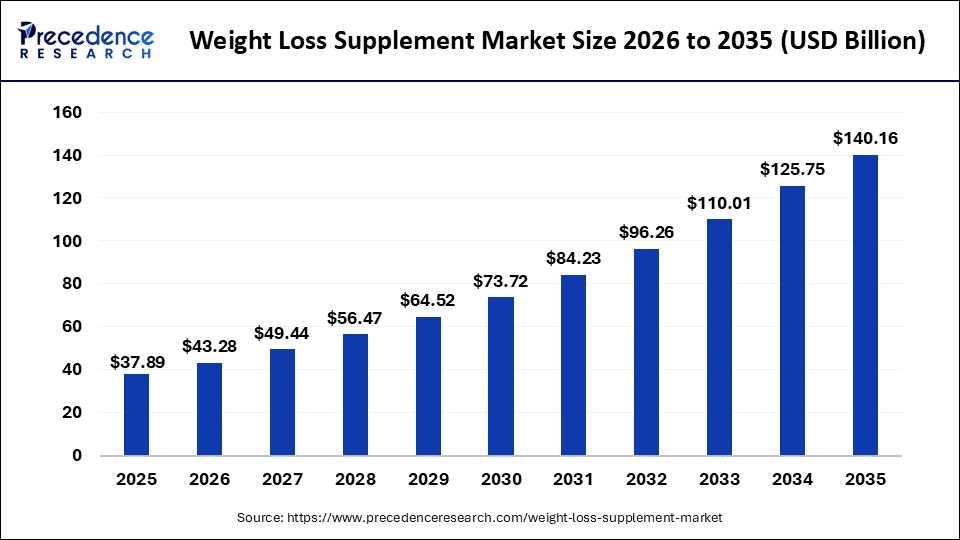
- The global weight loss supplement market was valued at USD 37.89 billion in 2025.
- The market is expected to grow from USD 43.28 billion in 2026 to USD 140.16 billion by 2035, at a 13.98% CAGR from 2026 to 2035.
- North America held the largest market share of 37% in 2025, while Asia Pacific is expected to grow the fastest.
- By type, powders led with 38% market share in 2025.
- By ingredients, vitamins & minerals accounted for 55% of the market.
- By distribution channel, the offline segment held 71% market share.
- By end use, the 18-40 years age group accounted for the largest share at 58% in 2025.
Global Adults Advised to or Considering Weight Loss
- In 2026, around 81% of adults living with obesity worldwide had either been advised to lose weight or had considered weight management.
- Statista survey included 3,094 adults with obesity across 14 countries between December 17, 2025, and January 9, 2026.
- According to Ipsos, Brazil and the UAE recorded the highest shares, with 94% each.
- Mexico followed at 93%, while Saudi Arabia reached 92%.
- Spain reported 90%, reflecting strong awareness of healthy weight management.
- Romania and Italy recorded 86% and 84%, respectively.
- India stood at 83%, slightly above the global average.
- Austria reported 81%, while Turkey recorded 80%.
- The UK and Poland accounted for 70% and 71%, respectively.
- Canada and South Korea had the lowest shares among surveyed countries, at 66% each.
Current Weight Loss Program Statistics
(Reference: cheatdaydesign.com)
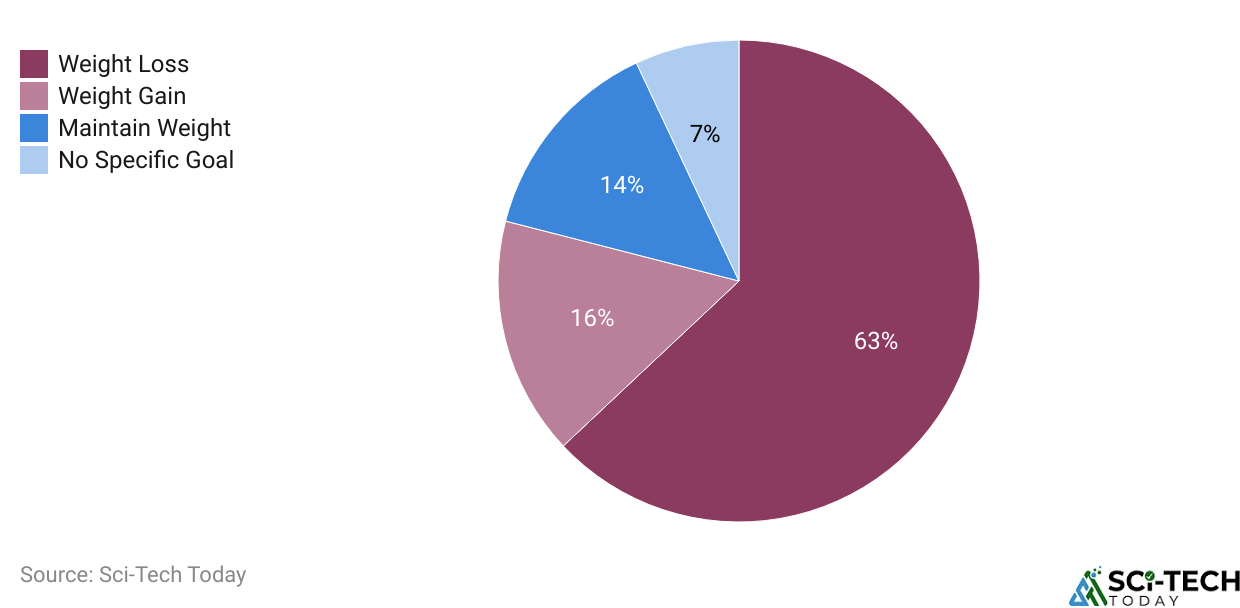
- In 2024, approximately 63% of people worldwide are actively engaged in efforts to lose weight.
- On the other hand, other weight goal shares are followed by weight gain (16%), maintain weight (14%), and no specific goal (7%).
(Reference: cheatdaydesign.com)
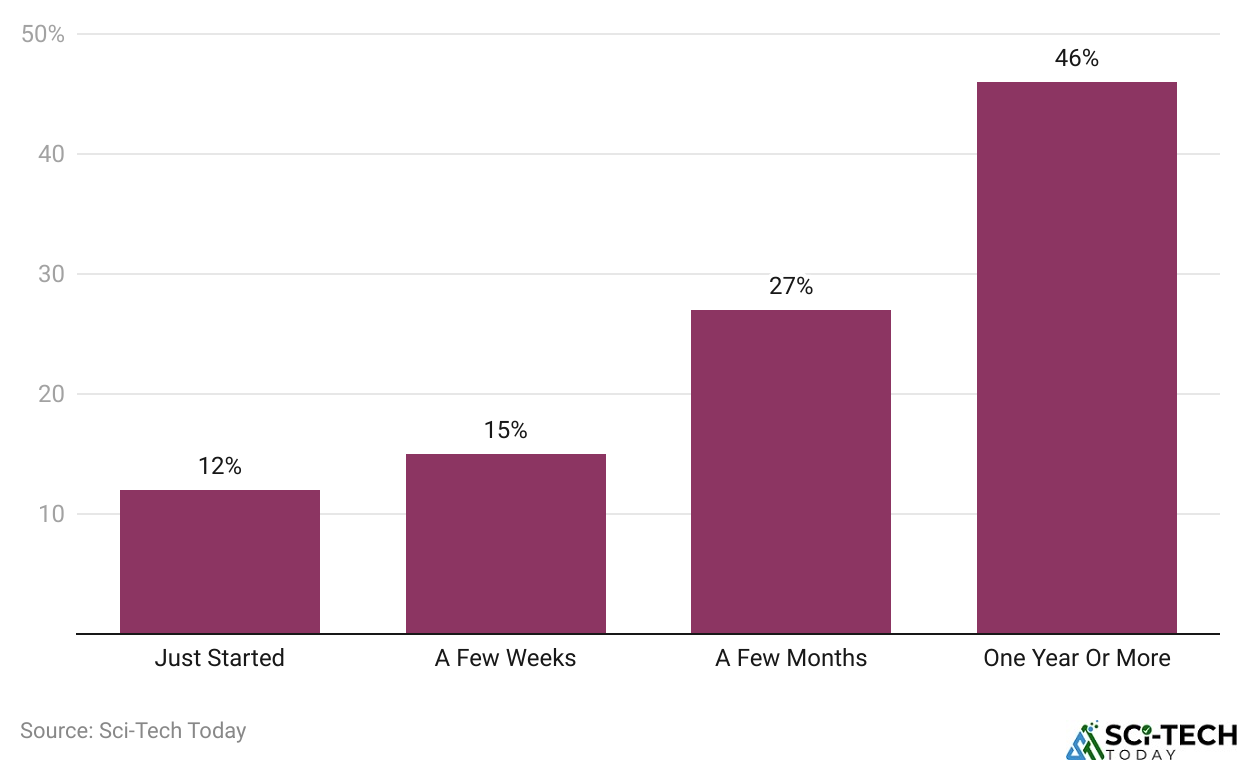
- Weight Loss Statistics also explains that around 46% of people have been practicing different weight loss techniques and programs for the last year or more to get into the exact shape.
- Besides, in 2024, only 27% of people started their weight loss program a few months ago, followed by a few weeks (15%), and just starting (12%).
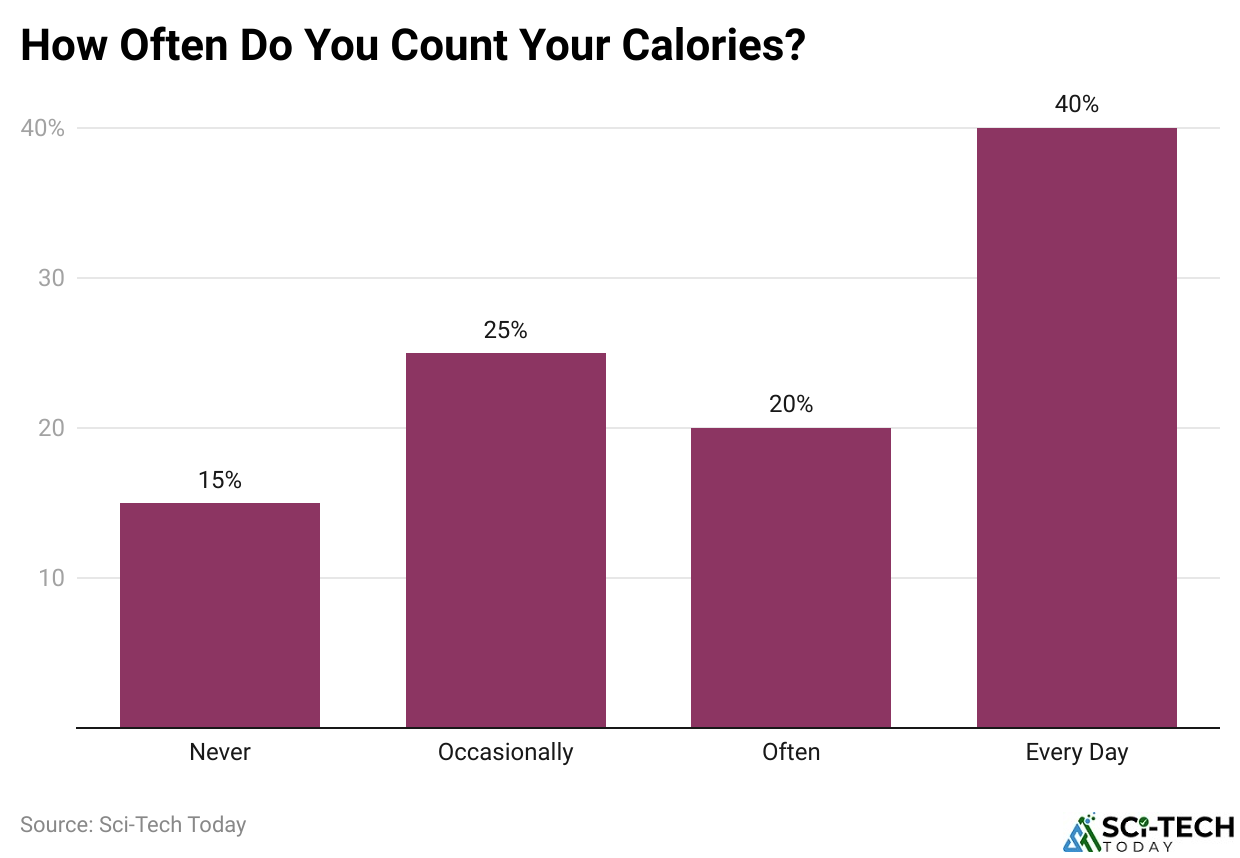
- In 2024, one out of every ten individuals on a diet relies on calorie counting to manage their weight.
- During the same period, nearly 85% of people worldwide have been actively monitoring their calorie intake.
- 40% of people count their calories regularly, followed by 20% (often), 25% (occasionally), and 15% (never).
Semaglutide Patent Expiry and Global Obesity Market Insights
- Semaglutide is the active ingredient in Ozempic for diabetes and Wegovy for obesity treatment.
- It was the world’s second-best-selling prescription medicine with USD 26 billion in sales in 2024, growing by about 40% annually.
- While semaglutide patents remain valid in many countries until the early 2030s, they will begin expiring in several markets in 2026.
- Countries losing patent protection include India, Canada, China, Brazil, and Turkey.
- These countries represent around 40% of the world’s population.
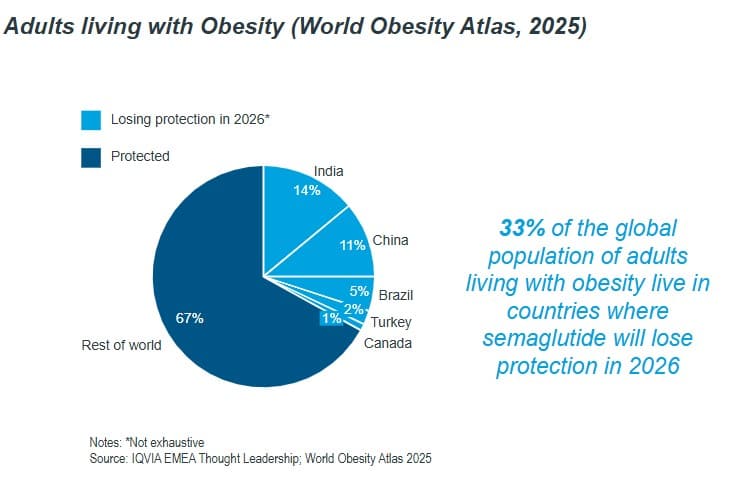
- They also account for about 33% of adults living with obesity worldwide.
(Source: iqvia.com)
- India represents 14% of adults with obesity in countries where patent protection ends in 2026.
- China accounts for 11%, Brazil for 5%, while Turkey and Canada each contribute 2%.
- The remaining 67% of adults with obesity live in countries where semaglutide patents continue beyond 2026.
Most Common Weight Loss Methods and Habits, 2026
- Around 60% of people trying to lose weight reduce their calorie intake, making diet control the most common approach, according to pmc.ncbi.nlm.nih.gov.
- About 60% of individuals also include regular physical activity in their weight loss plan.
- Regular daily exercise and balanced eating habits produce better long-term results than short-term diet trends.
- The use of prescription weight loss medicines and bariatric surgery remains relatively low, with less than 5% of people choosing these treatment options, although demand continues to rise.
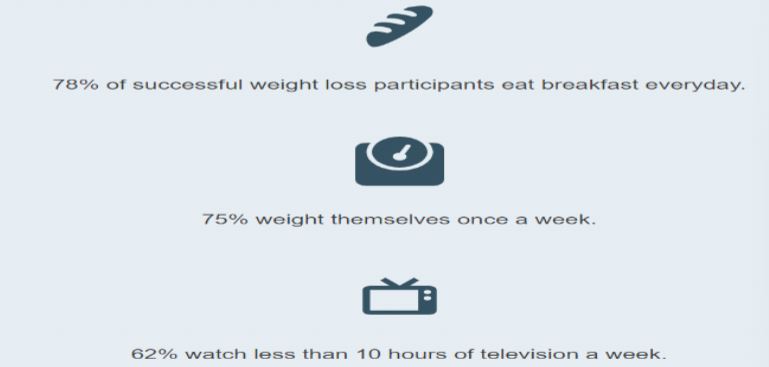
- Around 92% of successful weight loss achievers monitor their progress by weighing themselves at least once every week.
- Clinical studies show that sleeping 8 hours instead of 5.5 hours can increase fat loss and reduce muscle loss by up to 60% while following a calorie-restricted diet.
Weight Loss Success Rates by Treatment Method
- ASMBS further reported that intensive lifestyle programs combining diet and exercise help people lose an average of 7.4% of body weight. Still, much of this weight is usually regained within 4.1 years without continued support.
- A real-world study of 51,085 adults found that bariatric surgery resulted in an average weight loss of 58 pounds (24%) after 2 years, while GLP-1 medicines produced 12 pounds (4.7%), increasing to about 7% among people who remained on treatment for 1 year.
- JAMA Internal Medicine reported that within 1 year, 81.8% of tirzepatide users achieved at least 5% weight loss, compared with 66.5% for semaglutide. For 10% weight loss, the rates were 62.1% and 37.1%, while 42.3% and 18.1% achieved 15% weight loss.
- In the SURMOUNT-1 trial, 15%, 32%, and 36% of participants taking 5 mg, 10 mg, and 15 mg tirzepatide achieved at least 25% weight loss, compared with 1.5% receiving placebo.
- Long-term studies show bariatric surgery patients maintained 23.4% weight loss after 5 years and 22.2% after 15 years, while 75.7% remained successful weight-loss responders after 55.7 months.
Summary
Weight loss is a journey that takes time, patience, and healthy habits. There is no quick solution that works forever. Eating healthy foods, exercising regularly, sleeping well, and staying active can help you reach your goals.
Start with small changes and stay consistent every day. Focus on improving your overall health instead of only the number on the scale. With the right lifestyle, you can lose weight, feel better, and enjoy a healthier, happier life.
FAQ
The healthiest way is to eat a balanced diet, exercise regularly, sleep well, and stay consistent.
Most experts recommend losing 1-2 pounds (0.5-1 kg) per week.
Fruits, vegetables, lean protein, whole grains, and healthy fats are great choices.

Sources